
Seasonal freezing and thawing cycles can severely compromise your block paving. As water seeps into cracks and pores, it expands upon freezing, exerting pressure that worsens existing damage. This process leads to cracks, potholes, and uneven surfaces, ultimately increasing maintenance demands. Understanding these impacts is essential for effective management. But how can you proactively address these issues to guarantee your paving remains durable and resilient?
Key Takeaways
- Freeze-thaw cycles cause water to infiltrate cracks, leading to expansion and increased pressure that exacerbates existing pavement damage.
- Ice formation leads to surface deformation and instability, resulting in potholes and frost heave that compromise block paving durability.
- Repeated freeze-thaw events weaken the subgrade, reducing soil strength and contributing to rapid deterioration of the pavement structure.
- Regular inspections and maintenance help identify cracks and drainage issues early, preventing further damage from seasonal freezing and thawing.
- Using freeze-thaw resistant materials and sealing joints can significantly enhance the resilience and longevity of block paving against seasonal changes.
Understanding Freeze-Thaw Cycles
As temperatures fluctuate around the freezing point, understanding freeze-thaw cycles becomes vital for evaluating their impact on materials like block paving.
These cycles involve water infiltrating cracks and pores, where it freezes and expands, creating significant pressure—up to 220 MPa—capable of fracturing materials. This freeze-thaw interaction exemplifies mechanical weathering, and materials with porous structures, such as concrete and brick, exhibit reduced material resilience under repeated cycles.
Each freeze-thaw cycle not only causes immediate damage but also leads to cumulative degradation over time, as thermal stress exacerbates material vulnerability. Proper drainage solutions can help mitigate some of the damage caused by these cycles, improving the overall durability of block paving.
Awareness of these processes is important for predicting the longevity and durability of block paving in climates prone to such fluctuations, guiding appropriate maintenance and material selection strategies.
Impact on Block Paving
When freeze-thaw cycles occur, they greatly impact the integrity of block paving. Ice penetration exacerbates existing cracks, leading to further breakage and instability. As water freezes, it expands, creating pressure that compromises block stability.
Over time, this results in potholes and frost heave, where the pavement surface lifts unevenly. Thawing can cause the pavement to sink, weakening its foundation and making it more susceptible to damage.
Additionally, repeated freeze-thaw cycles lead to unstable pavement conditions, increasing maintenance needs and repair costs. To mitigate these effects, guarantee proper drainage systems are in place and conduct regular maintenance, including sealing cracks promptly. These strategies help maintain the longevity and functionality of your block paving. Furthermore, implementing regular inspections can help identify potential issues before they escalate into major problems.
Common Issues Caused by Freeze-Thaw Damage
Freeze-thaw damage can lead to a range of common issues that compromise the performance and longevity of block paving.
These freeze-thaw effects considerably impact pavement integrity, resulting in:
- Cracks and Potholes: Water trapped in cracks expands during freezing, causing new damage.
- Surface Deformation: Frost heave forms ice lenses beneath the surface, leading to uneven pavement.
- Subgrade Weakening: Repeated freeze-thaw cycles can deteriorate the soil structure, reducing its strength.
Each of these issues accumulates over time, leading to rapid deterioration and instability of the paving. Regular inspections to identify potential issues can help mitigate these freeze-thaw effects before they escalate.
It's vital to monitor these signs to maintain the durability of your block paving and guarantee a safe, functional surface.
Ignoring these indicators can lead to more severe structural problems and costly repairs.
Prevention and Maintenance Strategies
To effectively mitigate the risks associated with freeze-thaw damage, implementing a thorough strategy for prevention and maintenance is essential.
Start by sealing cracks and joints to prevent water infiltration; use crack fillers suitable for freezing temperatures and apply sealants in early fall.
Incorporate preventive measures like high-quality sealcoating, which provides a moisture barrier and extends durability.
Guarantee proper drainage by redirecting downspouts and clearing snow promptly to minimize water absorption.
Adopt maintenance tips such as regular inspections to identify drainage issues early.
Additionally, consider using materials resistant to freeze-thaw effects and apply protective treatments to existing structures.
These preventive measures can considerably reduce the risk of damage and lower long-term maintenance costs. Furthermore, ensuring proper drainage can enhance the effectiveness of permeable block paving in managing seasonal water runoff.
Repair and Rehabilitation Techniques
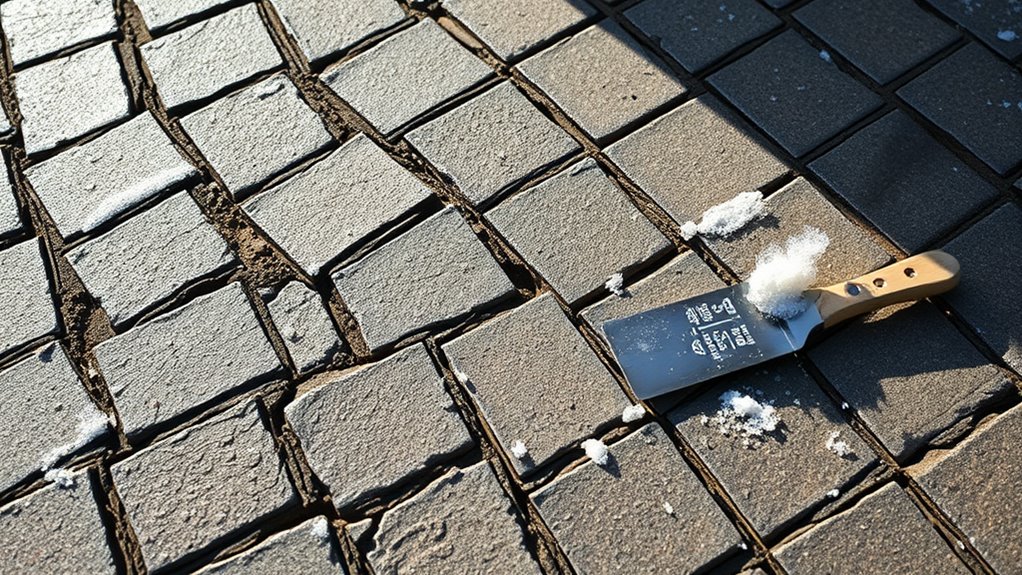
After implementing effective prevention and maintenance strategies, you may still encounter situations necessitating repair and rehabilitation of block paving affected by seasonal freezing.
Employing appropriate repair methods is essential to restoring functionality and durability. Consider these techniques:
- Partial-Depth Patching: Ideal for minor cracks, this method repairs the top layer, ensuring a cost-effective solution.
- Full-Depth Patching: For extensive damage, this approach involves removing all layers to install new base and surface courses, enhancing longevity.
- Lift and Relay: This technique corrects uneven surfaces by re-laying damaged blocks, ensuring proper drainage.
In addition, rehabilitation strategies, such as cold milling or asphalt overlays, can effectively enhance pavement performance and extend its service life. Regular maintenance is crucial, as durable block paving can be easily repaired when damaged, ensuring long-term value.
Environmental Considerations for Sustainable Paving
As climate change intensifies, the need for environmentally sustainable paving solutions becomes increasingly critical. Traditional materials like asphalt and concrete greatly impact carbon emissions, urban heat, and stormwater runoff.
To mitigate these effects, consider sustainable materials such as permeable pavements, which allow water infiltration, and recycled options like rubberized asphalt and glassphalt. These alternatives not only reduce resource depletion but also enhance durability. Additionally, using resin driveways can provide a smooth, permeable surface that aids in stormwater management.
When selecting materials, look for eco-friendly certifications from reputable organizations like the U.S. Green Building Council's LEED program. Implementing local sourcing and conducting life cycle analyses can further minimize environmental footprints.
Frequently Asked Questions
How Do Freeze-Thaw Cycles Vary by Geographic Location?
Freeze-thaw cycles vary considerably by geographic location, with climate impact causing regional differences. Near-polar areas typically experience one cycle, while temperate zones face multiple cycles annually, intensifying pavement damage due to frequent temperature fluctuations.
Can Freeze-Thaw Damage Be Visually Assessed Without Professional Help?
You can't reliably assess freeze-thaw damage through visual inspection alone. Damage indicators can be subtle and inconsistent, requiring expert analysis to accurately evaluate the extent of deterioration beyond mere aesthetics and surface appearances.
What Are the Long-Term Costs of Neglecting Freeze-Thaw Damage?
Neglecting freeze-thaw damage leads to escalating repair costs over time. You'll face increased maintenance costs without effective maintenance strategies, resulting in more extensive, expensive repairs or even complete repaving due to cumulative structural deterioration.
Are There Specific Block Materials More Resistant to Freeze-Thaw Damage?
When choosing block material types, consider that porcelain pavers exhibit superior freeze thaw resistance due to low porosity, while concrete pavers with air entrainment and low permeability also perform well under freeze-thaw conditions.
How Do Temperature Fluctuations Influence Freeze-Thaw Cycles?
Temperature fluctuations directly impact freeze patterns, causing water to freeze and thaw within materials. This cycle progressively weakens structures, as the expansion and contraction stress the material, leading to cracks and eventual deterioration. Regular maintenance is essential.
Conclusion
In summary, understanding the effects of seasonal freezing and thawing on block paving is essential for maintaining its integrity. Did you know that nearly 50% of pavement failures are attributed to freeze-thaw cycles? By implementing effective drainage solutions and conducting regular inspections, you can greatly extend the lifespan of your paving. Prioritizing prevention and timely repairs not only reduces maintenance costs but also enhances the overall durability of your pavement, ensuring it withstands the harshest winter conditions.

Adding curb appeal to your home can be a daunting task, but it doesn't have to be. Designing and installing Read more

As homeowners, we are always looking for ways to improve and add value to our properties. One popular choice for Read more

Block paving, like a well-tended garden, is a testament to the care and attention given to one's property. Just as Read more