
Winter's chill is like a silent thief, ready to steal the integrity of your block paving if you're not prepared. You might think your paving's tough enough to handle the cold, but without proper preparation, it could face serious damage. Start by inspecting for cracks and blockages that could become more problematic over the season. But there's a lot more to take into account beyond just the surface—each step you take now can save you headaches later. So, what are the essential tips to keep your paving safe and sound this winter?
Importance of Pre-winter Inspection
When winter approaches, a thorough pre-winter inspection of your block paving is essential for maintaining its integrity. This inspection not only protects your investment but also enhances pavement safety.
Start with an inspection checklist that focuses on identifying cracks, potholes, and uneven surfaces. It's vital to catch these issues early, as they can worsen under the stress of snow and ice.
While inspecting, evaluate drainage systems for blockages that could lead to standing water. Look for signs of erosion and surface distress, as these can create slippery conditions, heightening the risk of accidents.
Be sure to assess the condition of joints and seals; damaged seals allow moisture to penetrate, leading to further deterioration during the freeze-thaw cycle. Additionally, consider applying sealant protection to enhance the appearance and longevity of your block paving before winter sets in.
Identifying Common Paving Issues
Block paving can encounter a variety of common issues that, if not addressed promptly, may lead to significant damage and costly repairs. To maintain paver stability, you need to be aware of these issues:
| Issue | Cause | Solution |
|---|---|---|
| Poor Earthworks | Inferior sub-base preparation | Improve earthworks before installation |
| Inadequate Compaction | Insufficient sub-base compaction | Compact thoroughly during installation |
| Shifting Blocks | Movement due to poor restraints | Install adequate edge restraints |
| Sunken Blocks | Soil erosion or heavy traffic | Regularly assess and lift blocks |
| Erosion of Jointing Sand | Weathering or pressure | Re-sand joints to restore stability |
Identifying these issues early can prevent further complications. For instance, shifting blocks create uneven surfaces, posing tripping hazards and allowing for water infiltration. Similarly, erosion of jointing sand jeopardizes the overall paver stability, leading to more significant damage over time. Proper drainage solutions can also help mitigate some of these issues, ensuring your block paving remains safe and intact throughout the winter months. Keeping an eye on these common concerns guarantees your block paving remains safe and intact throughout the winter months.
Effective Cleaning Methods
Addressing common paving issues sets the stage for effective block paving maintenance, especially as winter approaches. You should start by removing any debris like leaves and branches to enhance safety and prevent organic matter from damaging your paving. Hand-pull weeds, guaranteeing you get the roots to halt future growth.
For your cleaning methods, consider the cleaning frequency that suits your environment. Pressure washing is excellent for heavy dirt, moss, and algae, but make sure you use suitable cleaners to protect your blocks. Alternatively, soft washing offers a gentler approach for heavily soiled areas.
If you prefer a more eco-friendly product, the bucket and broom method with hot soapy water works wonders for lighter soils. Steam cleaning is another effective option, reaching deep into cracks and crevices. Regular cleaning with a pressure washer can significantly help in stopping moss growth on your paving.
If you don't have a pressure washer, a specialized block paving cleaner can also achieve impressive results—just remember to rinse and re-sand your joints afterward. Always wear protective gear while cleaning to guarantee your safety.
Benefits of Sealing Pavers
Regularly sealing your pavers offers a multitude of benefits that enhance both their appearance and durability. By applying a quality sealant, you'll experience several significant sealing advantages that protect your investment.
- Aesthetic Appeal: Sealing enriches the colors of your pavers, making them look vibrant while also protecting against fading from sun exposure.
- Moisture and Stain Resistance: A good seal prevents water penetration and reduces stain absorption, keeping your pavers cleaner and more durable.
- Joint Stability: Sealing hardens joint sand, ensuring that your pavers remain stable and safe, which is essential for long-term maintenance.
Understanding the proper application techniques is important. Make sure to apply sealant on calm, sunny days to avoid issues with chemical dispersion. Additionally, remember that reapplication is necessary every 1-2 years to maintain those benefits. Neglecting this could lead to unwanted mold growth or even structural damage, reducing the lifespan of your pavers. Furthermore, sealing can extend the lifespan of your pavers by preventing damage from environmental factors.
Safe Snow Removal Techniques
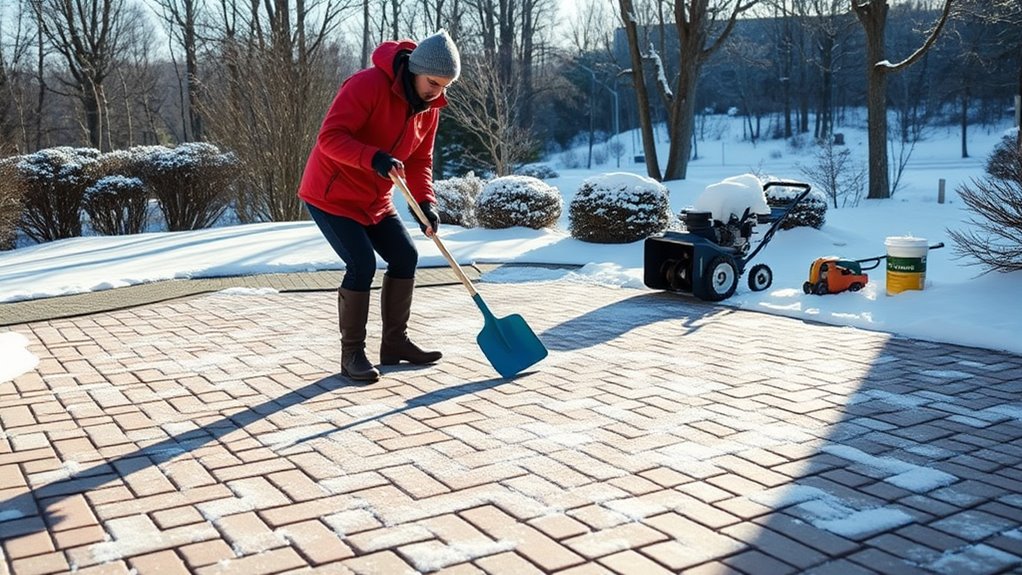
When winter arrives and snow blankets your pavers, employing safe snow removal techniques becomes essential to maintain their integrity and appearance.
Start by using the right tools; opt for plastic or rubber-edged shovels to prevent scratching. Avoid metal shovels and choose ergonomic options to ease back strain. For efficient clearing, consider using snow blowers equipped with rubber guards.
When you begin shoveling, clear snow promptly to avoid water runoff that could damage the pavers. Always shovel in the direction of the paver joints to minimize dislodgment. Setting a snow removal schedule can help lighten your workload and keep your surfaces clear. Before snowfall, cover exposed areas with a tarp for easier removal.
For light, fluffy snow, a leaf blower can be surprisingly effective. If you encounter slippery patches, spread sand or kitty litter for traction.
Additionally, utilizing a wet/dry vacuum can expedite the process by blowing snow away. Remember, by carefully implementing these snow removal techniques, you can protect your pavers and guarantee they remain in excellent condition throughout the winter season. Moreover, using permeable block paving systems can enhance drainage and reduce flooding risk during winter thaws.
Choosing De-icing Materials Wisely
Choosing the right de-icing materials for your pavers is essential for maintaining their longevity and appearance during winter months.
Using the appropriate de-icer not only enhances its effectiveness but also minimizes environmental impact. Here are three options to reflect upon:
- Sodium Chloride (Rock Salt): This is least damaging to concrete pavers, making it an excellent choice for interlocking structures. It works efficiently and is cost-effective.
- Calcium Chloride: Effective down to –20°F, this option penetrates ice quickly. While it's slightly less toxic than sodium chloride, be cautious with its application to avoid damage, especially on porous surfaces.
- Magnesium Chloride: Best suited for clay pavers, this option is less harmful to the environment but may not perform well in extremely low temperatures.
When choosing a de-icer, reflect upon the specific paver type and the environmental consequences of your choice.
Overusing de-icers can lead to significant harm to surrounding vegetation and water sources.
Always prioritize materials that offer both de-icer effectiveness and reduced environmental impact for the best results during winter. Additionally, consider using permeable designs that allow for water drainage to further protect your pavers from winter damage.
Preventing Water Damage
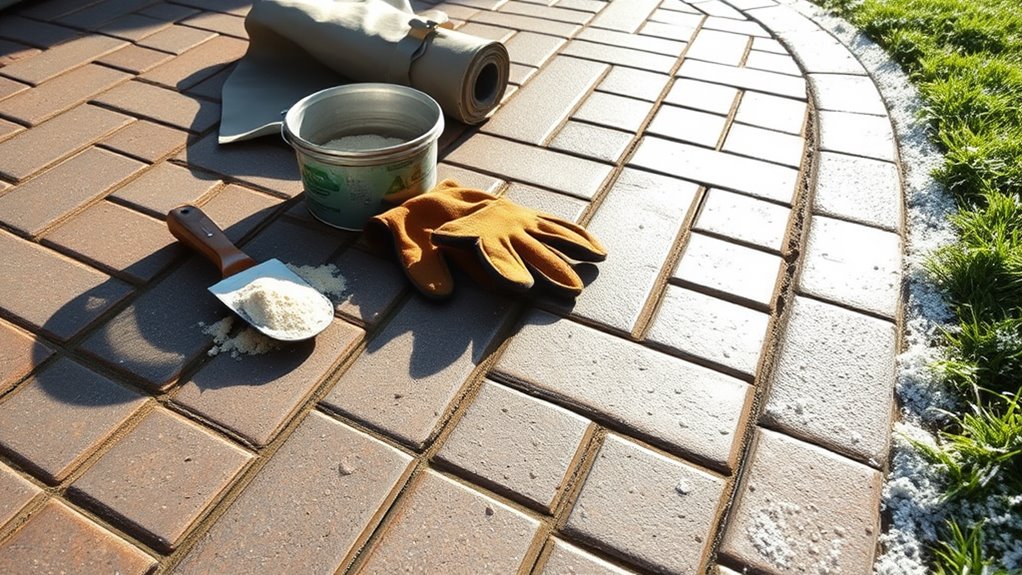
After selecting the right de-icing materials, it's time to focus on preventing water damage to your block paving. Start by ensuring that your paved area has the proper slope for efficient water flow. This helps prevent water from pooling, which can lead to serious damage during winter months.
Next, clear away any debris, like leaves or branches, which can trap moisture and deteriorate your paving. Consider pressure washing your blocks to remove moss and algae, but be cautious not to damage the surface.
After cleaning, inspect for cracks or loose blocks, addressing these issues promptly. Joint maintenance is essential; re-sand the joints to prevent water penetration. Filling gaps with jointing sand will minimize freeze-thaw damage, as trapped water can expand and crack your blocks. Additionally, using permeable block paving can further enhance drainage and reduce water accumulation on your driveway.
For added protection, apply a sealant that shields against harsh winter elements. Finally, regularly check for any signs of water accumulation and promptly resolve them.
Keeping your block paving in top condition now will save you from costly repairs later, ensuring your outdoor space remains beautiful and functional throughout winter.
Maintaining Drainage Systems
Maintaining drainage systems is essential for preserving the integrity of your block paving throughout winter. Effective water management helps prevent erosion and guarantees that water flows away from paved areas, reducing the risk of damage.
Start with regular inspections to identify blockages and clear gutters and drains of debris. Prompt repairs of any issues will keep water pooling at bay.
Here are three key drainage solutions to implement:
- Install Permeable Paving: This allows water to filter through the surface, enhancing drainage and reducing runoff.
- Use Drainage Channels: Strategically placed channels can direct water away from high-traffic areas, preventing pooling and potential ice formation.
- Maintain the Slope: Confirm your paved areas have a slight slope to promote proper runoff, preventing stagnant water that could lead to erosion. Incorporating high-quality materials in your paving design will further enhance durability and drainage efficiency.
Regular Winter Maintenance Tips
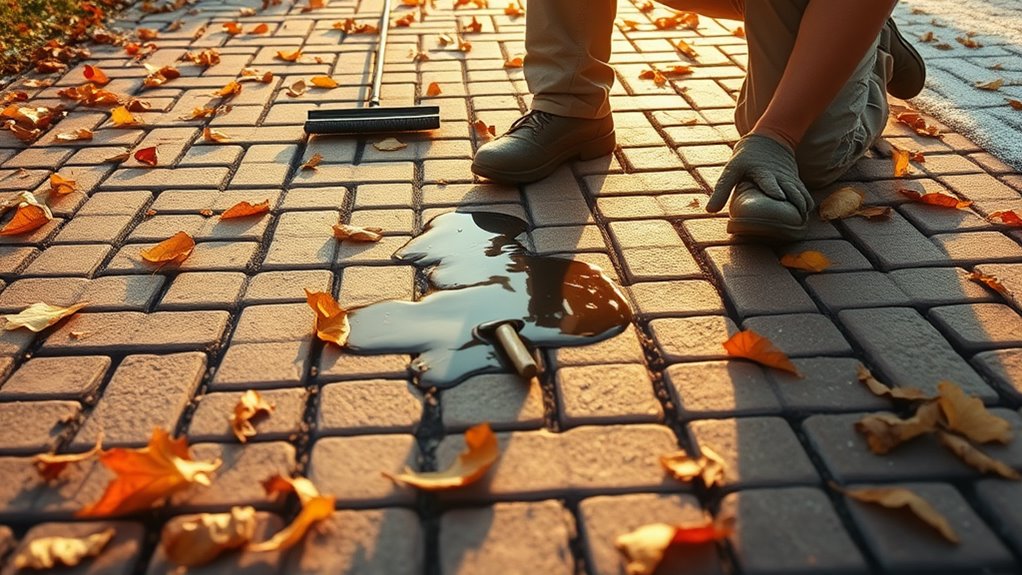
Regular winter maintenance is essential for keeping your block paving in top condition and preventing long-term damage. Start by clearing debris like leaves and branches to avoid stains and organic deterioration, which can harm the paver color and seasonal aesthetic.
Use a brush to sweep away dirt, enhancing both safety and appearance.
Next, consider pressure washing your pavers with a suitable cleaner. This eliminates moss and algae while using gentle pressure to avoid dislodging any blocks.
Afterward, inspect your paving for cracks or loose blocks, especially post-snow or rain, and address any issues promptly to prevent further damage.
Re-sand joints to maintain a secure surface and apply a sealant tailored to your paver type, following the manufacturer's guidelines. This protects against harsh winter conditions.
When snow arrives, use plastic-edged shovels to clear it, avoiding metal tools that could scratch the surface.
Lastly, choose de-icing agents specifically designed for concrete pavers, testing a small area first. This careful approach preserves your block paving, ensuring it remains beautiful and functional throughout the winter months. Additionally, regular maintenance helps to maintain the durability and value of your block paving investment.
Enhancing Paver Longevity
Enhancing the longevity of your block paving starts with a commitment to thorough cleaning and maintenance. By ensuring your pavers are clean and well-maintained, you can greatly extend their lifespan.
Here are three key steps you should follow:
- Thorough Cleaning: Remove dirt and stains using safe cleaning solutions specifically marked for paver surfaces. This prevents damage and maintains aesthetics.
- Joint Sand Application: After cleaning, apply polymeric sand between the pavers. This not only binds and hardens for stability but also minimizes weed growth and water infiltration.
- Sealing: Choose a sealant suitable for your paver types and apply it uniformly. This protective barrier guards against weathering, UV rays, and salt damage, enhancing durability. Additionally, regular inspections can help prolong lifespan by identifying potential issues before they escalate.
Conclusion
By taking these steps to prepare your block paving for winter, you're not just protecting your investment; you're ensuring your outdoor space stands strong against the frosty bite of winter. Think of it as wrapping your pavement in a warm blanket, shielding it from harsh elements. Regular maintenance and proactive measures will keep your pavers looking pristine and functioning well. So, gear up and embrace the chill—your block paving will thank you when spring arrives.

Adding curb appeal to your home can be a daunting task, but it doesn't have to be. Designing and installing Read more

As homeowners, we are always looking for ways to improve and add value to our properties. One popular choice for Read more

Block paving, like a well-tended garden, is a testament to the care and attention given to one's property. Just as Read more