
You might be surprised to learn how permeable block paving can cut flooding by about 30%. This approach allows rainwater to seep through the surface, reducing the amount of water that accumulates during heavy storms. As you consider the implications for urban planning and environmental sustainability, think about how this technology not only addresses immediate flood risks but also enhances the overall health of urban ecosystems. What other benefits could emerge from adopting this innovative solution? The answers may be more impactful than you expect.
Mechanism of Permeable Block Paving
When considering permeable block paving, it's important to understand its fundamental mechanism, which relies on a well-designed structure. This system features multiple layers, starting with interlocking concrete pavers that have gaps between them. These gaps facilitate water drainage, allowing water to seep through efficiently.
Beneath the surface layer lies a base layer composed of gravel and crushed stone, which filters and temporarily stores water, enhancing the system's effectiveness. The void spaces within the base layer are vital, as they enable water to pass through to the soil below.
However, the infiltration rate can vary based on soil type and pavement design. In cases where the soil doesn't absorb water quickly enough, installation techniques may include adding underdrains to aid in water distribution, reducing the risk of flooding and erosion.
Design considerations play a significant role in this mechanism. Customizing the base course layer to local conditions, along with selecting appropriate materials, greatly influences the overall effectiveness of the permeable paver system.
Ensuring a compacted stone base of at least 12 inches enhances performance, particularly in areas facing heavy rainfall or poor soil conditions. Additionally, implementing proper drainage solutions during the installation can further optimize the system's capacity to manage water effectively.
Benefits of Permeable Pavements
Permeable pavements offer a range of benefits that greatly enhance urban infrastructure and environmental sustainability. By effectively managing stormwater, these systems reduce flood discharge and peak flows, considerably mitigating risks associated with heavy rainfall. This not only protects property but also promotes groundwater replenishment, filtering pollutants from runoff in the process.
From a functional perspective, permeable pavements are durable and can withstand heavy loads, making them suitable for high-traffic areas. They require less maintenance than traditional paving methods, ensuring long-term usability. The ability to customize designs and materials also leads to aesthetic enhancements, allowing you to create visually appealing spaces that complement urban landscapes.
The social implications of using permeable pavements are considerable. They enhance safety by reducing puddle formation, lowering hydroplaning risks, and minimizing slips and falls in colder climates. Additionally, they contribute to cleaner waterways, promoting public health and environmental awareness.
Design and Implementation Strategies
Implementing effective design strategies for permeable block paving is crucial to optimizing its performance and longevity. Start by adhering to precise design specifications, guaranteeing that your base and subbase thickness meets water storage needs while supporting traffic loads. Typically, a thicker design prevails for enhanced stability.
Use appropriate material specifications, selecting specific stone sizes for reservoir and filter layers to maximize infiltration.
When it comes to construction techniques, prepare the ground meticulously by excavating to a suitable depth above the water table, compacting low points with Type 3 material. Install haunching kerbs on unedged sides, leaving gaps for jointing aggregate.
Incorporate a geotextile membrane, overlapping joints by 300mm to prevent filtrate entry into soil.
Pay attention to slope limitations, maintaining surfaces with ≤5% slopes, and guarantee that underlying soils achieve a minimum infiltration rate of 2 inches per hour.
Protect the subgrade from over-compaction and avoid excavation during wet conditions. For weak soils, consider increasing subbase depth and using impermeable liners to mitigate infiltration issues.
Additionally, ensuring compliance with planning legislation for drainage provisions is essential for successful permeable block paving installations.
These design and implementation strategies will greatly enhance the effectiveness of permeable block paving in flood risk management.
Environmental Impact Overview
The adoption of permeable block paving offers significant environmental advantages, particularly in urban areas prone to flooding. By reducing stormwater runoff, these pavements allow water to infiltrate the soil, preserving the natural water cycle and reducing reliance on artificial drainage systems. You'll find that permeable block paving can store up to 70% of rainfall, resulting in only 30% runoff under ideal conditions.
Moreover, this paving system protects water quality by filtering out pollutants like heavy metals and bacteria, using natural processes without requiring harsh chemicals or external energy. This not only enhances aquifer recharge but also minimizes air pollution, contributing to urban resilience by mitigating the urban heat island effect.
Implementing permeable surfaces supports sustainable practices in urban planning, improving energy efficiency and creating healthier environments.
The long-term durability of permeable block paving also leads to economic savings by reducing costs related to water treatment and flooding. Ultimately, integrating this solution into urban landscapes not only enhances aesthetic appeal but also promotes environmental sustainability, making it an essential component of modern urban development strategies.
Research and Development Insights
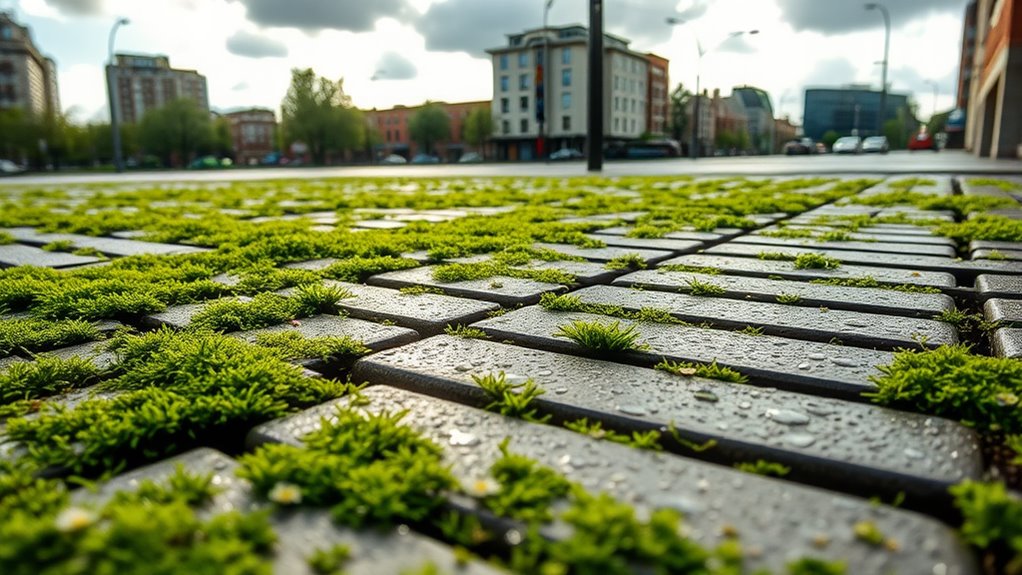
Innovative research into permeable block paving is reshaping urban flood management strategies. By focusing on material innovation, researchers are developing advanced permeable pavements that can achieve remarkable infiltration rates, effectively storing up to 70% of rainfall. This significant reduction in stormwater runoff is essential for mitigating local flooding, especially in urban environments.
Performance evaluation studies highlight the importance of base layer design, which directly influences infiltration efficiency. Selecting appropriate materials, such as pervious concrete and porous asphalt, is necessary for optimizing performance under varying conditions, including climate variations like freeze-thaw cycles.
Moreover, the research emphasizes the need for site-specific designs that consider local soil types and environmental factors. For instance, clay soils may require deeper subbases and potential underdrains to enhance performance.
Long-term studies indicate that with proper maintenance, permeable pavements maintain their flood reduction capabilities over time, proving their durability and effectiveness. Additionally, incorporating resin drives can further enhance the permeability of surfaces and contribute to sustainable urban development.
As urban areas face increasing flooding risks due to climate change, ongoing research and development into these innovative solutions are essential for creating resilient cities.
Policy and Regulatory Framework
As urban areas increasingly recognize the benefits of permeable block paving for flood management, a supportive policy and regulatory framework is vital for successful implementation.
You'll find that adherence to EPA guidelines and local regulations is essential for regulatory compliance. States like Connecticut and New York City have initiated programs that incorporate permeable pavements to enhance stormwater management, showcasing how effective policies can drive infrastructure funding toward sustainable solutions.
Federal and state laws bolster these initiatives by recognizing permeable pavements as a key component of green infrastructure, aimed at improving water quality and reducing runoff.
By aligning local projects with these regulations, you not only guarantee compliance but also gain access to potential funding opportunities that can alleviate construction costs.
Moreover, the emphasis on maintenance practices and location-specific designs assures long-term performance, making it easier for municipalities to adopt these systems.
As you navigate the policy landscape, focus on these frameworks to enhance urban resilience against extreme weather events, ultimately contributing to climate change mitigation efforts.
Conclusion
Incorporating permeable block paving can considerably reduce flooding by 30%, transforming urban landscapes. Imagine a bustling city where heavy rains no longer overwhelm drainage systems, thanks to permeable pavements that allow water to seep into the ground. This innovative solution not only alleviates surface water issues but also promotes groundwater replenishment and improves water quality. By adopting such strategies, cities can enhance their resilience against extreme weather, paving the way for sustainable urban development.

Adding curb appeal to your home can be a daunting task, but it doesn't have to be. Designing and installing Read more

As homeowners, we are always looking for ways to improve and add value to our properties. One popular choice for Read more

Block paving, like a well-tended garden, is a testament to the care and attention given to one's property. Just as Read more