
When it comes to weatherproofing block paving, understanding the specific environmental challenges is vital. You'll need to take into account factors like moisture retention and freeze-thaw cycles that can compromise the material's integrity. Proper preparation, effective sealant application, and regular maintenance are essential steps. But what materials and installation practices will truly enhance durability against extreme conditions? The answer lies in a strategic approach that balances quality and resilience.
Key Takeaways
- Ensure a robust base by excavating 250mm deep and using MOT type 1 crushed stone for stability and drainage.
- Use a 50mm layer of sharp sand to create a smooth bedding surface for pavers, enhancing drainage and stability.
- Select high-quality, durable materials like granite or high-density concrete pavers to withstand extreme weather conditions.
- Regularly inspect and replenish joint sand to prevent moisture accumulation and reduce freeze-thaw damage.
- Apply a suitable sealant, such as polyurethane, to protect against water penetration and weather-related issues.
Importance of Proper Preparation for Block Paving
When it comes to block paving, proper preparation is essential for ensuring durability and functionality.
Start by excavating to a depth of around 250mm, accommodating the block thickness. Use MOT type 1 crushed stone for the sub-base, focusing on base stability and effective drainage solutions. Compact this layer thoroughly to prevent future subsidence.
Add a 50mm layer of sharp sand as a bedding layer, which provides a smooth surface for your pavers. Install kerbs or edging blocks to prevent shifting, ensuring a robust structure.
Always assess the condition of the sub-grade to confirm it can support the paving. By adhering to these guidelines, you'll create a resilient foundation that withstands weather extremes and heavy traffic. Additionally, incorporating proper drainage solutions during installation can significantly enhance the longevity of your block paving.
Techniques for Effective Sealant Application
To achieve ideal results in sealant application for block paving, it's crucial to follow precise techniques that guarantee durability and effectiveness.
Here are key steps to take into account:
- Select the Right Application Tools: Use a Tampico masonry brush for edges and a medium pile roller or sprayer for larger areas.
- Choose Appropriate Sealant Types: Opt for acrylic, polyurethane, or silane/siloxane-based sealants tailored for block paving.
- Apply Two Coats: Begin with a first coat for penetration, followed by a second coat at right angles for improved coverage.
Ensure the temperature is between 5°C to 25°C (50°F to 77°F) and allow adequate drying time—2 hours between coats and 24 hours before heavy use for ideal results. Additionally, using high-quality driveway sealers can significantly enhance the longevity of your block paving.
Understanding Weather Impacts on Pavers
Understanding the impacts of weather on block paving is essential for maintaining its integrity and longevity.
Moisture management plays a critical role; excessive rain can cause water pooling, leading to erosion and instability. Water seeping into joints fosters moss and algae growth, creating slippery surfaces.
Additionally, temperature fluctuations, especially during freeze-thaw cycles, pose significant risks. Water trapped in joints can freeze, causing blocks to shift or crack. This ground movement can create gaps in the joints and compromise structural integrity.
Proper installation and a robust base are crucial to mitigate these issues. By addressing these weather impacts, you can enhance the durability and performance of your block paving for years to come. Regular inspections to identify potential issues can further prevent complications caused by harsh weather conditions.
Regular Maintenance for Long-Lasting Durability
Maintaining block paving requires consistent attention to detail, especially in light of the weather-related challenges previously discussed.
Here are three vital practices to guarantee long-lasting durability:
- Weekly Sweeping: Regularly clear debris to prevent weed growth and dirt accumulation.
- Seasonal Cleaning: Perform deep cleans, especially after winter, to remove grime and debris.
- Weed Control: Inspect for weeds and promptly remove them using manual methods or safe weed killers.
Implementing these preventative measures will greatly enhance the longevity of your block paving. Additionally, regular inspections for damage and replenishing joint sand are also essential, as they help maintain proper base preparation to ensure the stability of the paving.
Choosing the Right Materials and Installation Practices
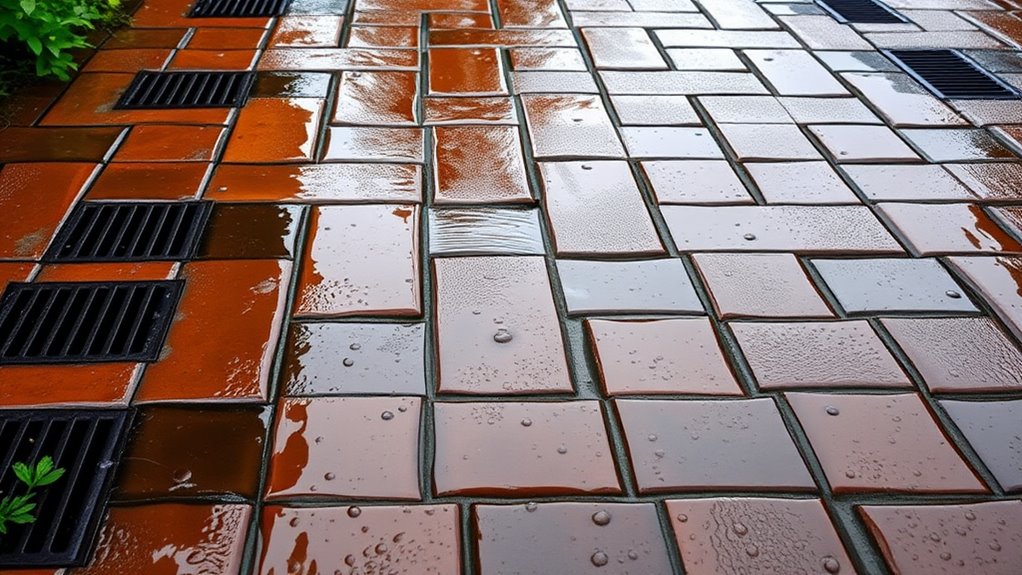
When selecting materials and installation practices for block paving, it's crucial to prioritize durability and weather resistance to guarantee long-term performance.
Opt for natural stone options like granite or high-density concrete pavers for their exceptional material durability under extreme conditions. Consider synthetic materials such as high-density polyethylene for high-traffic areas due to their heat resistance.
Implementing permeable pavers enhances environmental sustainability by promoting natural water drainage and reducing surface runoff. Proper base construction and compaction are critical for maintaining stability and infiltration rates.
High-quality workmanship guarantees durability and minimizes repairs. Finally, choose sealers wisely; polyurethane offers superior protection, while eco-friendly options like water-based sealers provide good, albeit less robust, coverage. Additionally, using permeable options can significantly help manage stormwater and enhance ecological benefits.
Frequently Asked Questions
Can I Apply Sealant During Winter Months?
You shouldn't apply sealant during winter weather. Cold temperatures can compromise sealant effectiveness, leading to poor adhesion. Make certain the surface is clean and dry, and consider applying sealant before winter for best results.
How Often Should I Reseal My Block Paving?
You should reseal your block paving every 3 to 5 years, depending on traffic and environmental conditions. Choose high-quality sealant types for effective paver maintenance, ensuring durability and longevity of your paving surfaces.
What Are Signs That My Pavers Need Resealing?
When paver discoloration resembles a fading canvas, you'll notice dull surfaces, efflorescence issues, and stains. Cracks, chips, or water absorption signals that it's time to reseal for protecting your pavers from further deterioration.
Can I Use a Homemade Sealant for My Pavers?
You can use a homemade sealant, but its effectiveness varies greatly with the ingredients. Inadequate protection, inconsistent quality, and potential damage to your pavers make commercial options more reliable for long-term maintenance.
Is Pressure Washing Safe for All Types of Pavers?
Pressure washing isn't safe for all paver materials. High-pressure washing can damage concrete, brick, and terracotta pavers, causing surface erosion and joint dislodgement. Always test a small area first to guarantee compatibility with your specific paver type.
Conclusion
In weatherproofing block paving, remember that "an ounce of prevention is worth a pound of cure." By preparing your sub-base properly, applying high-quality sealants, and committing to regular maintenance, you'll guarantee your pavers can withstand extreme conditions. Choosing the right materials and installation practices is essential for long-lasting durability. With these strategies in place, you can protect your investment and enjoy a resilient, functional surface for years to come.

Adding curb appeal to your home can be a daunting task, but it doesn't have to be. Designing and installing Read more

As homeowners, we are always looking for ways to improve and add value to our properties. One popular choice for Read more

Block paving, like a well-tended garden, is a testament to the care and attention given to one's property. Just as Read more