
If you think block paving can withstand the harshest winter conditions without a scratch, you're in for a surprise. Proper care and preparation are vital to prevent ice and snow from wreaking havoc on your driveway or patio. By understanding the right techniques and materials to protect your pavers effectively, you can guarantee their longevity. Let's explore the essential steps you need to take to safeguard your investment against winter's wrath.
Key Takeaways
- Conduct seasonal inspections and clear debris to enhance safety and prevent damage from ice and snow accumulation.
- Apply a high-quality sealant post-cleaning to protect block paving from moisture penetration and freeze-thaw cycles.
- Use breathable protective coverings like tarps or plastic sheeting to shield pavers from snow and ice while allowing moisture to escape.
- Employ safe de-icing alternatives like Calcium Magnesium Acetate or sand to prevent damage to the block paving and surrounding plants.
- Maintain proper drainage with a minimum gradient and clear drainage channels regularly to prevent water pooling and potential freeze damage.
Pre-Winter Preparation for Block Paving
As winter approaches, it's important to prepare your block paving to guarantee it withstands the harsh conditions ahead.
Start with seasonal inspections; clear any debris like leaves and branches to enhance safety and prevent deterioration.
Conduct thorough pressure washing to eliminate moss and algae buildup.
Inspect for damage, checking for cracks or uneven surfaces that could worsen if left unattended.
Verify proper drainage to avoid pooling and subsequent freezing issues.
For effective paver maintenance, trim back overhanging vegetation to minimize risks from falling branches.
Finally, consider applying a high-quality sealant post-cleaning to protect against moisture and freeze-thaw cycles. Regular inspections are crucial to identify potential issues before they escalate.
Taking these steps now will save you from significant headaches when winter hits.
Using Protective Coverings Effectively
When preparing your block paving for winter, using protective coverings effectively can greatly reduce the risk of damage from snow and ice.
| Cover Type | Key Features | Installation Tips |
|---|---|---|
| Tarps | Durable, cost-effective | Guarantee tight securing against winds |
| Plastic Sheeting | Moisture barrier, lightweight | Cover entire area, check compatibility |
| Specialized Covers | Ideal fit for pavers | Extend beyond edges for runoff |
For cover selection, prioritize breathable materials that allow moisture escape. Secure your covers tightly to prevent displacement during storms, and promptly remove them after winter weather events to avoid moisture entrapment. By following these installation tips, you'll maintain the integrity of your block paving through harsh winter conditions.
Safe De-Icing Alternatives for Pavers
Finding safe de-icing alternatives for block paving is essential, especially considering the potential damage traditional salt can inflict on both your surfaces and the environment.
Eco-friendly options like Calcium Magnesium Acetate (CMA) are biodegradable and effective at lower temperatures while minimizing corrosion.
Potassium chloride is another alternative material that's safer for plants and works effectively above 15 degrees Fahrenheit.
For a less corrosive option, magnesium chloride is often included in eco-friendly commercial products.
Additionally, sand and gravel can provide traction without melting ice, protecting both pets and plants.
Even DIY solutions like vinegar and water or baking soda and warm water can serve as gentle de-icers, allowing you to maintain your block paving without harmful chemicals.
Snow Removal Techniques to Prevent Damage
To effectively prevent damage to your block paving during winter, employing the right snow removal techniques is essential. You can choose between manual techniques and mechanical methods to maintain your pavers effectively.
1. Manual Removal: Use plastic shovels to avoid damaging pavers, and break up thick ice with metal shovels before switching back to plastic.
Schedule regular removal every one to two hours to prevent buildup.
2. Mechanical Methods: Opt for snow blowers with rubber guards and avoid metal skis to minimize gouging.
3. Alternative Methods: For light snow, use leaf blowers or a wet/dry vacuum converted to a blower for efficient removal.
These strategies will help safeguard your block paving from winter-related damage.
Ensuring Proper Drainage and Maintenance
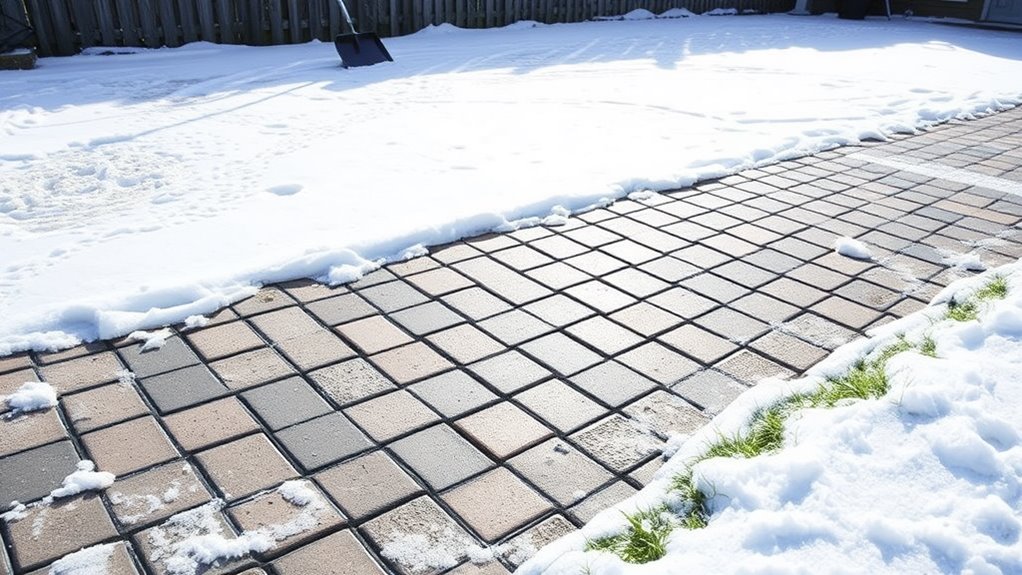
Guaranteeing proper drainage and maintenance is essential for preserving the integrity and appearance of block paving throughout the year.
Implement effective drainage techniques, like maintaining a minimum gradient of 1 in 40, or even 1:80 for block paving, to facilitate water flow. Install linear channel drains to efficiently direct surface water and prevent pooling.
Regularly clear debris from drainage channels and replenish joint sand to guarantee proper water passage. Emphasize maintenance practices such as sweeping, pressure washing, and weed control to keep the surface clean.
Periodically inspect for damage, addressing cracks or loose blocks promptly. Finally, consider resealing every few years to protect against stains and weather damage, extending the lifespan of your block paving. Additionally, ensuring drainage solutions are integrated during installation can significantly mitigate water-related issues and enhance durability.
Additional Tips for Long-Term Protection
- Seal your pavers before winter to guard against moisture damage and staining.
- Schedule regular inspections to identify cracks or shifting, allowing for prompt repairs that prevent escalation.
- Consider professional maintenance services to guarantee expert care and maintenance scheduling, addressing issues before they become major problems.
- Incorporate regular cleaning techniques into your routine to prevent dirt and grime buildup that can lead to surface damage.
Frequently Asked Questions
How Often Should I Seal My Block Paving?
You should seal your block paving every 3-5 years, or every 2 years in high-traffic or harsh weather areas. Regular maintenance tips, like cleaning and replenishing joint sand, help extend sealing frequency and effectiveness.
Can I Use a Pressure Washer on My Pavers?
You can use a pressure washer on your pavers, but choose the right pressure washer tips. Consider safer paver cleaning techniques like steam cleaning or walk-behind surface cleaners to prevent damage while effectively removing dirt and grime.
What Types of Pavers Are Most Resistant to Ice Damage?
When considering pavers, you'd find natural stone and concrete pavers stand out. They withstand freeze-thaw cycles, resist cracking, and maintain durability, making them excellent choices for areas prone to ice damage and harsh winter conditions.
How Can I Tell if My Pavers Need Replacement?
To assess your paver condition, look for visible replacement signs like cracks, potholes, and uneven surfaces. Missing pavers or drainage issues also indicate it's time for replacement to prevent further deterioration and safety hazards.
Is It Safe to Park on Block Paving During Winter?
Parking on block paving during winter can be safe if the surface remains stable. Confirm you regularly check for cracks and avoid overloading, as heavy vehicles can compromise block stability and lead to damage.
Conclusion
In the grand scheme of winter, it's ironic how a little preparation can save your block paving from the icy grip of damage. By taking these proactive steps, you're not just protecting your investment; you're ensuring that your pavers survive the season unscathed, while others watch their driveways crumble. So, embrace the techniques outlined—because nothing says "I love winter" like a pristine, damage-free driveway, right? After all, who wouldn't want to dodge an expensive repair bill?

Adding curb appeal to your home can be a daunting task, but it doesn't have to be. Designing and installing Read more

As homeowners, we are always looking for ways to improve and add value to our properties. One popular choice for Read more

Block paving, like a well-tended garden, is a testament to the care and attention given to one's property. Just as Read more