
Incorporating geometric art into your block paved patio can transform an ordinary outdoor space into a visually striking environment. By carefully selecting patterns and colors, you can create defined areas that draw the eye and enhance your patio's functionality. Consider the layout, paver shapes, and even decorative elements to achieve a harmonious design. Discover how to choose the right patterns and colors that not only elevate aesthetics but also guarantee durability and practicality.
Key Takeaways
- Select a geometric pattern that complements your patio's size and shape, such as herringbone or basketweave for visual interest.
- Incorporate contrasting colors within the pavers to create bold designs and enhance the geometric art effect.
- Mix different paver shapes and sizes to add depth and complexity to your geometric layout.
- Use borders and edging in geometric styles to frame the patio and define the artistic elements.
- Introduce focal points with circular block paving or pinwheel patterns to draw attention to specific areas of the patio.
Choosing the Right Geometric Pattern for Your Patio
How do you choose the perfect geometric pattern for your patio? Start by evaluating your space's size and shape, ensuring your chosen pattern complements its dimensions.
For high-traffic areas, opt for the herringbone pattern due to its remarkable pattern durability, while the basketweave offers a visually striking alternative for both contemporary and traditional aesthetics.
Consider how each design creates aesthetic balance; the circular block paving can serve as a focal point, enhancing your garden's visual appeal.
Don't forget to align your choice with your home's architectural style, ensuring cohesion throughout your property. Additionally, selecting a timeless design can enhance the overall investment in your outdoor space.
Essential Design Elements for Geometric Block Paving
While designing geometric block paving for your patio, it's crucial to take into account various essential elements that enhance both functionality and aesthetics.
Prioritizing design flexibility and material selection can lead to a stunning outcome. Here are four key elements to contemplate:
- Compatibility: Verify pavers are compatible in size and shape for a cohesive look.
- Material Quality: Opt for high-quality materials to guarantee durability and visual consistency.
- Shape Variety: Use a mix of shapes to create visual interest and depth.
- Color Contrast: Incorporate contrasting colors for bold, eye-catching designs. Additionally, consider incorporating permeable options to enhance drainage and manage stormwater effectively.
Exploring a Variety of Geometric Patterns
Geometric block paving offers a canvas for creativity, transforming patios into dynamic outdoor spaces. You can explore various geometric patterns to enhance your patio's visual appeal.
Symmetrical designs like the herringbone pattern create stability, while the fan pattern introduces flowing arcs that guide the eye. The basketweave pattern utilizes interlocking pavers to add a woven texture, perfect for outdoor spaces.
For a striking focal point, consider the pinwheel pattern, which features pavers laid at 90-degree angles. The octagonal pattern provides harmony across different areas, while the cobblestone pattern brings a rustic charm. Additionally, incorporating permeable block paving can enhance drainage efficiency and reduce flooding risks in your outdoor design.
Creating Borders and Edging for a Defined Look
When designing a patio, incorporating borders and edging can greatly enhance its overall appearance and functionality. Choosing the right materials and patterns guarantees both aesthetic appeal and practical benefits.
Consider these key factors:
- Kerbstone Selection: Choose large, rectangular stones for a robust border that defines your space.
- Edging Stability: Set edging stones in a full mortar bed to prevent movement and maintain structure.
- Height and Privacy: Use retaining walls not just for aesthetics but also to create tiered levels and privacy.
- Drainage Solutions: Opt for permeable paving to promote water drainage and prevent standing water, as proper drainage solutions are essential for maintaining the durability and longevity of your patio.
Enhancing Your Design With Color Contrast
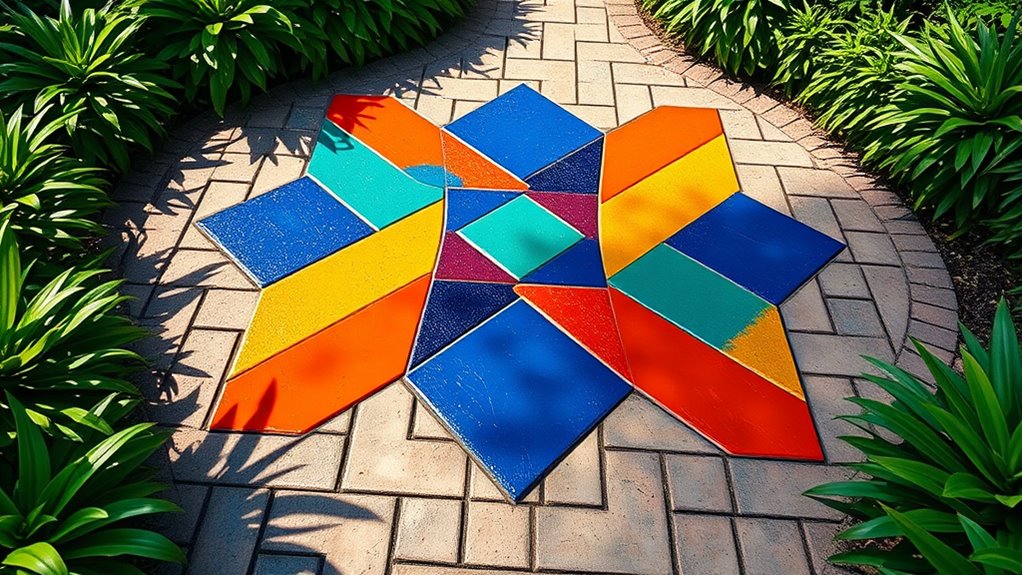
To elevate your patio's design, consider the powerful impact of color contrast, which can transform an ordinary space into a visually striking environment.
Utilizing color psychology, you can select complementary colors—those opposite each other on the color wheel—to create vibrant focal points. Combine this with various geometric shapes, like zigzags and chevrons, to enhance visual interest.
Prioritize material balance by integrating elements like ceramic tiles in bold hues alongside the warmth of inlaid wood. You might even explore split-complementary palettes to maintain harmony while adding depth. Additionally, the importance of careful planning ensures that your geometric designs are not only visually appealing but also functional and cohesive within the overall patio layout.
Practical Considerations for Installation and Maintenance
Before diving into the aesthetic elements of your patio, it's crucial to address the practical considerations of installation and maintenance. Proper installation techniques guarantee durability and functionality, while maintenance tips keep your geometric art looking fresh.
- Base Preparation: Use a six-inch gravel base, compact it well, and add landscape fabric to prevent weeds.
- Paver Laying: Lay pavers in your chosen pattern, guaranteeing a quarter-inch gap for sand filling.
- Regular Maintenance: Inspect and replenish sand in the joints to prevent weed growth and maintain stability.
- Cleaning: Use mild detergent and water to keep your pavers clean and visually appealing. Additionally, incorporating regular inspections into your maintenance routine helps identify any potential issues early on.
Frequently Asked Questions
What Types of Paver Materials Are Best for Geometric Patterns?
For geometric patterns, you'll find concrete pavers versatile, natural stone elegant, and permeable pavers eco-friendly. Using colored bricks can enhance your design, providing a vibrant touch that complements the intricate shapes and patterns you create.
How Do Weather Conditions Affect the Longevity of Block Paving?
You'll notice weather impact greatly affects block paving longevity factors. Extreme rainfall can cause erosion, while freeze-thaw cycles lead to cracking. Regular maintenance and quality materials are essential to withstand these conditions and extend your patio's life.
Can I DIY My Geometric Block Paved Patio?
Yes, you can DIY your geometric block paved patio! Utilize DIY techniques for excavation and base preparation, while seeking design inspiration from popular patterns. With careful planning and execution, your project can be both stunning and durable.
What Maintenance Is Required for Geometric Block Paved Patios?
To maintain your geometric block paved patio, utilize effective cleaning techniques like power washing, and consider sealing options to protect against stains. Regular inspections and re-sanding guarantee stability while enhancing the overall appearance of your design.
Are There Any Design Software Tools for Planning Geometric Patios?
Imagine crafting your dream patio with design software that transforms visions into reality. Powerful planning tools like Cedreo and GreenScapes streamline your process, ensuring precision and creativity in geometric patio layouts that captivate clients.
Conclusion
By weaving geometric art into your block paved patio, you transform an ordinary space into a vibrant tapestry of shapes and colors. Imagine stepping onto a herringbone pattern that draws the eye toward a radiant central tile, while contrasting hues dance beneath your feet. Each carefully placed paver becomes a brushstroke, crafting a masterpiece that invites admiration. With thoughtful design and maintenance, your patio will not only captivate but also endure, becoming a cherished outdoor retreat for years to come.

Adding curb appeal to your home can be a daunting task, but it doesn't have to be. Designing and installing Read more

As homeowners, we are always looking for ways to improve and add value to our properties. One popular choice for Read more

Block paving, like a well-tended garden, is a testament to the care and attention given to one's property. Just as Read more