
Permeable concrete is your most sustainable paving choice, efficiently handling stormwater while cutting down on urban heat. It filters rain, easing the strain on sewer systems and preventing floods by reducing surface water accumulation. This open-pored material not only cools surrounding areas but also contributes to cleaner water bodies by naturally absorbing pollutants, promoting a healthier urban environment. On top of these environmental benefits, permeable concrete supports sustainable urban planning and meets regulatory compliance for eco-friendly construction. As you explore further, you’ll discover how these features integrate with broader ecological strategies to enhance infrastructure sustainability and urban resilience.
Defining Sustainable Paving

Sustainable paving, a cornerstone of modern eco-friendly construction, involves methods and materials that reduce environmental impact while enhancing infrastructure longevity. As you explore sustainable paving options, you’ll find that eco-friendly materials aren’t just about being green; they’re also about guaranteeing long-term durability in paving solutions.
One of the key materials in sustainable paving is permeable concrete. Unlike traditional concrete, permeable concrete allows water to pass through it, reducing runoff and preventing erosion. This material’s design is essential for managing water in urban areas, and its durability matches conventional alternatives.
You’re looking at a solution that stands up to the test of time while contributing to environmental sustainability. The use of permeable materials like those found in block paving can greatly mitigate the risk of flooding, enhancing both functionality and environmental compatibility.
Recycled plastic is another innovative material used in sustainable paving. By incorporating shredded plastic waste into the mix, this method not only reuses waste that would otherwise pollute the environment but also enhances the asphalt’s overall strength and longevity.
This dual-purpose approach guarantees that the paving you’re investing in won’t just last; it’ll also support the health of the planet.
When you choose sustainable paving, you’re opting for technologies that prioritise ecological balance and resource efficiency. This isn’t just paving; it’s a step towards a more sustainable future.
Environmental Impact of Asphalt
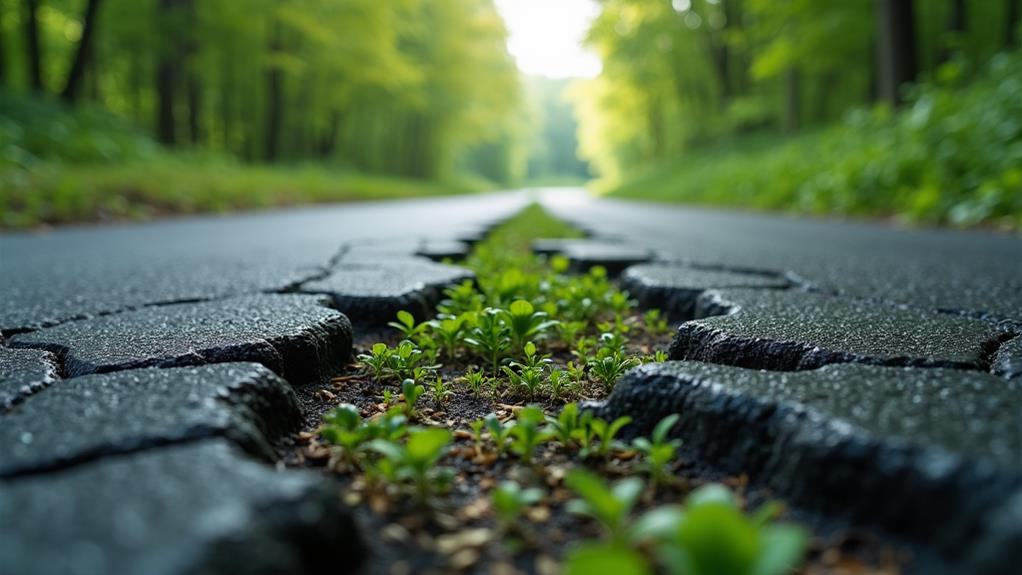
While exploring the benefits of innovative paving solutions, it’s important to also consider the more traditional methods, such as asphalt, and understand their broader environmental implications.
You’re likely aware that conventional asphalt contributes considerably to greenhouse gas emissions during its production and application. The high temperatures required to mix and lay asphalt release a substantial amount of carbon dioxide into the atmosphere.
However, the focus on eco-friendly asphalt is gaining momentum. Asphalt alternatives, such as those that incorporate recycled materials or use lower temperatures during production, can greatly reduce these environmental impacts.
These innovative solutions not only aim to preserve natural resources but also decrease the carbon footprint associated with their production.
Moreover, the development of warm-mix asphalt allows for mixing and compaction at lower temperatures, thereby reducing fuel consumption and associated emissions.
Another promising approach involves integrating bio-based materials into asphalt. These eco-friendly alternatives aren’t only better for the environment but they also often offer enhanced durability and cost-effectiveness.
As you navigate the choices in sustainable paving, it’s essential to weigh the environmental benefits of these asphalt alternatives.
Opting for eco-friendly asphalt can be a pivotal step towards reducing your project’s overall environmental impact.
Benefits of Permeable Concrete
Often overlooked, permeable concrete presents a compelling solution for modern infrastructure challenges, particularly in managing stormwater. As you explore sustainable paving options, consider how this innovative material not only supports water management by allowing rainwater to filter through and recharge groundwater but also mitigates urban heat islands, a critical factor in city planning.
Permeable block paving is particularly effective in managing rainwater, allowing for rapid drainage that reduces surface water accumulation and enhances flood prevention. Its integration into Sustainable Drainage Systems (SuDS) makes it an ideal choice for environmentally conscious projects.
Permeable concrete’s open-pore structure facilitates the quick absorption and release of rainwater, greatly reducing runoff and decreasing the burden on sewer systems during heavy showers. This capability is essential in preventing the flooding that plagues many urban areas during storm seasons. By managing stormwater at its source, you’re looking at a proactive approach to urban water challenges, making your projects more sustainable and compliant with environmental regulations.
Moreover, the thermal properties of permeable concrete contribute to heat reduction in densely built areas. Its lighter color reflects sunlight and its porosity enhances cooling, lowering local temperatures and reducing the need for air conditioning in surrounding buildings. This not only conserves energy but also fights against the heat island effect prevalent in urban settings.
Incorporating permeable concrete in your projects means you’re not just paving; you’re actively contributing to a cooler, more sustainable environment.
Recycled Plastic in Paving

Building on the notion of sustainable urban development, recycled plastic in paving emerges as another innovative method to address environmental concerns.
As you explore the potential of this technology, you’ll find that it not only reduces the landfill burden by repurposing plastic waste but also paves the way for more resilient infrastructure.
Imagine streets and sidewalks that contribute to the health of the planet by employing discarded plastic.
Here are some compelling reasons to support paving innovations using recycled plastic:
- Reduction of Plastic Waste: Millions of tons of plastic can be diverted from oceans and landfills.
- Durability: Roads are less prone to wear and tear, enduring various weather conditions.
- Cost-Effective: Less reliance on traditional, more expensive paving materials.
- Lower Carbon Footprint: Reduces greenhouse gas emissions during production.
- Innovative Use of Materials: Demonstrates creative solutions in tackling environmental challenges.
Rubber Pavements Overview
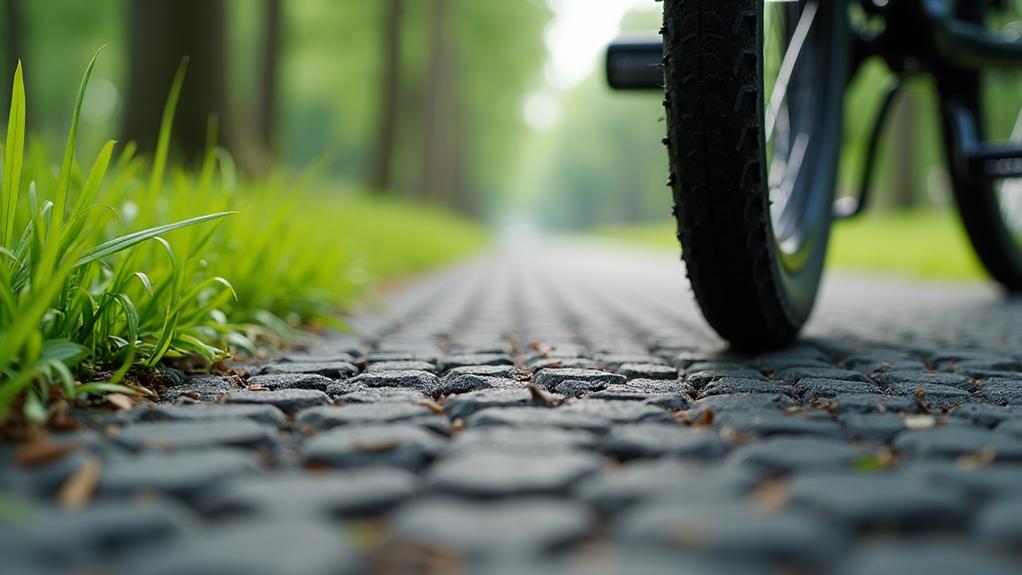
Switching gears from plastic to another sustainable option, rubber pavements stand out as a forward-thinking solution in eco-friendly infrastructure.
You’ll find that rubber pavements, primarily made from recycled tires, boast exceptional durability and flexibility due to their unique rubber properties. These characteristics not only reduce maintenance costs but also contribute to their longevity, making them an economically viable choice.
When you explore the installation techniques of rubber pavements, you’ll appreciate their adaptability and ease of application. The process typically involves blending granulated rubber particles with traditional paving materials like asphalt or binding them with resins to form a cohesive layer.
This innovative method enhances the pavement’s ability to absorb impacts and reduce noise, which is particularly beneficial in urban settings.
Furthermore, the use of rubber in pavements greatly reduces waste in landfills, as millions of tires are repurposed each year. By opting for rubber pavements, you’re supporting a circular economy that emphasises reusing materials in productive ways.
This choice not only preserves natural resources but also promotes a healthier environment by cutting down on pollution and energy consumption during production processes.
Comparing Paving Material Sustainability
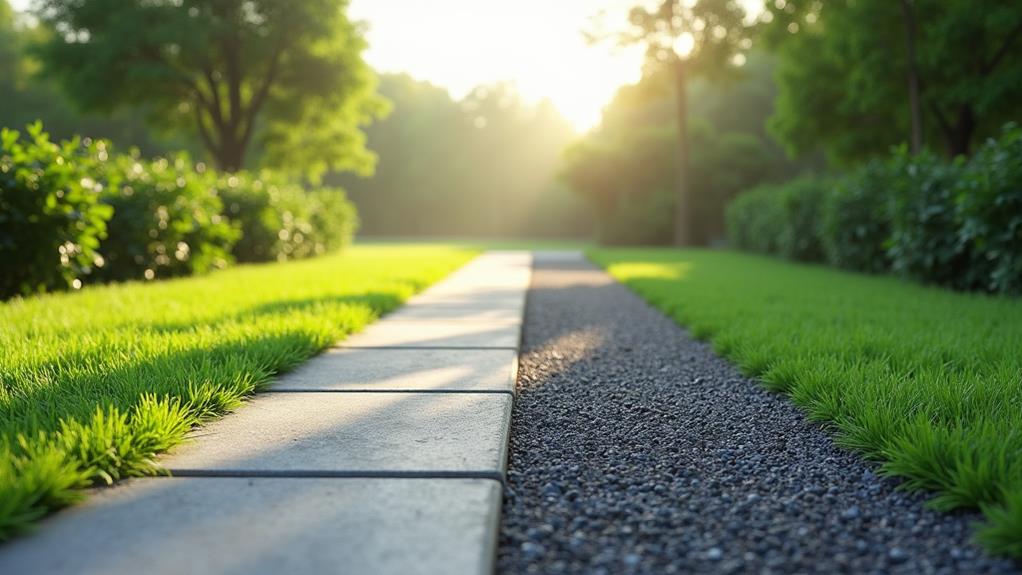
As we examine different types of sustainable paving materials, it’s clear that each option has distinct environmental impacts and benefits. You’re at a pivotal point where choosing the right material not only defines the aesthetics of your project but also its ecological footprint.
Natural stone, while durable and requiring slight processing, often involves significant quarrying impacts. Conversely, eco-friendly alternatives are gaining traction due to their lower environmental toll:
- Permeable Pavers: Reduces runoff, allowing water to recharge local aquifers.
- Recycled Plastic: Turns waste into functional, long-lasting paths.
- Reclaimed Asphalt: Diminishes the need for new materials and the associated emissions.
- Porous Concrete: Cuts down on runoff and improves stormwater management.
- Composite Pavement: Innovatively blends materials for enhanced sustainability.
Among these, Resin Bound Paving stands out for its permeable properties that mimic natural soil absorption, further promoting environmental sustainability by reducing runoff and filtering pollutants.
Each of these options presents an opportunity to lessen your environmental impact. For instance, using permeable materials not only prevents water pollution but also mimics natural land absorption, promoting a healthier urban environment.

Adding curb appeal to your home can be a daunting task, but it doesn't have to be. Designing and installing Read more

As homeowners, we are always looking for ways to improve and add value to our properties. One popular choice for Read more

Block paving, like a well-tended garden, is a testament to the care and attention given to one's property. Just as Read more