
When you're planning your block paving project, it's crucial to take into account how local regulations can shape your plans. These guidelines influence everything from the materials you can use to the required permits you'll need, affecting not just aesthetics but also safety and environmental impact. Maneuvering through these regulations may seem intimidating, but understanding them can save you from costly setbacks. So, what specific regulations should you be aware of, and how can they alter your initial vision?
Understanding Building Regulations
When starting on a block paving project, it's crucial to understand the building regulations that might affect your plans, especially since these standards are set by the government to guarantee safety and environmental responsibility.
While most building codes don't apply directly to paving projects, you must consider specific guidelines, particularly regarding drainage and access.
For instance, if your driveway exceeds 5 square meters, you'll need to manage rainwater runoff effectively, often necessitating the use of impermeable surfaces. Compliance with these regulations isn't optional; failing to adhere can lead to enforcement actions, including potential alterations or removal of your work.
Additionally, you may need permits from the Highway Department, regardless of Building Department requirements. Understanding these nuances is critical in laying a solid foundation for your project, ensuring you meet all local requirements.
Moreover, utilizing permeable materials can help you avoid the need for planning permission while also reducing environmental impacts. Proper drainage solutions are essential to prevent water pooling and enhance the longevity of your driveway.
Access and Layout Considerations
You need to prioritize path accessibility to confirm that all users, including those with disabilities, can navigate your space comfortably. ADA compliance requires surfaces to be stable, firm, and slip-resistant, while any openings in the paving mustn't exceed a ½ inch diameter to prevent tripping hazards.
When planning your layout, consider the slope and width of paths. A maximum slope of 1:6 will facilitate ease of movement, while proper path widths guarantee that pedestrians can safely pass.
Additionally, truncated dome brick pavers should be integrated to enhance pedestrian safety, providing significant visual contrast for individuals with visual impairments.
Confirm that your driveway placement accommodates both vehicles and pedestrians, minimizing potential conflicts. It is essential to be aware of local regulations regarding parking in front of a driveway to ensure compliance and avoid fines.
Regular maintenance of all surfaces is essential to preserve safety and accessibility, particularly in high-traffic areas.
Installation Permits Overview
Securing the right installation permits is essential for any block paving project, guaranteeing adherence to local regulations and standards.
You'll need to familiarize yourself with various permit types, such as Street Opening Permits for work within streets and Sidewalk Construction Permits for sidewalk-related activities. Each permit type has distinct requirements and may necessitate additional approvals from other departments.
The application process often starts with obtaining a valid permit from your local building department. You'll typically need to submit detailed plans and pay associated fees.
Understanding the specific regulations is critical, as permits are approved based on compliance with these local standards.
Keep in mind that different jurisdictions may impose varying restrictions, so it's important to consult with local authorities beforehand.
Permits can also have time limitations and may require inspections throughout the project. For emergency work, there are specific procedures that you'll need to follow.
Environmental and Aesthetic Factors
- Sustainable Materials: Opt for locally sourced, eco-friendly materials to reduce transportation emissions and support your community.
- Climate Adaptability: Select materials that can withstand local weather conditions, ensuring durability and performance throughout their lifespan.
- Permeable Design: Incorporating permeable block paving can mitigate water runoff and flooding, enhancing environmental sustainability.
- Aesthetic Choices: Choose colors and patterns that complement the surrounding landscape, creating a visually striking yet harmonious appearance.
Balancing these environmental considerations with your aesthetic choices not only enhances the overall appeal of your project but also positions you as a responsible contributor to ecological well-being. Additionally, choosing resin driveways can provide a durable and aesthetically pleasing solution that aligns with sustainable practices.
Planning and Design Standards
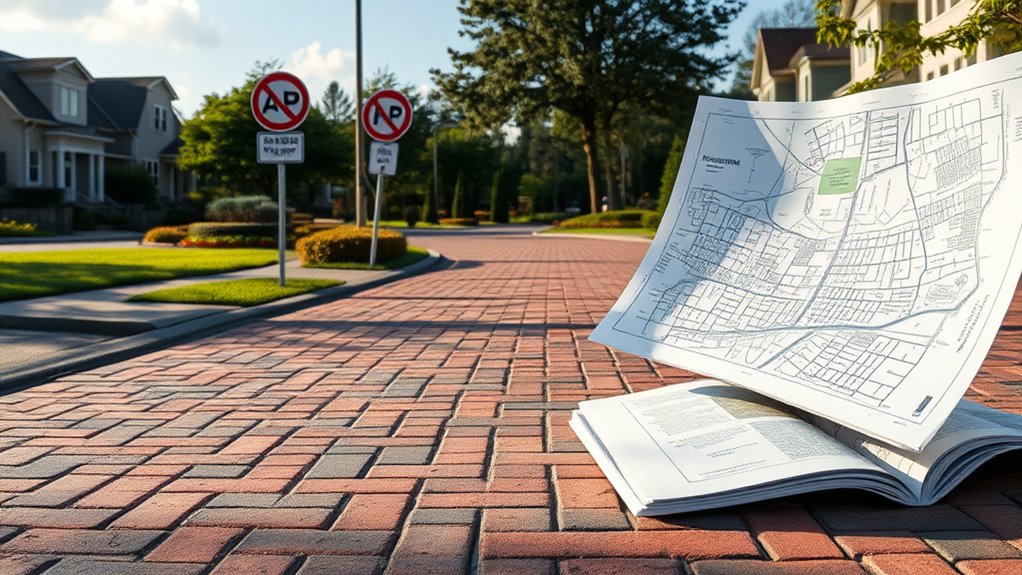
Planning your block paving project requires a thorough grasp of design standards and regulations that guarantee functionality and safety.
You'll need to pay close attention to minimum dimensions, such as parking spaces measuring at least 10 feet by 20 feet and varying aisle widths based on parking angles. Additionally, make certain your driveway widths meet the required specifications for commercial and industrial areas, which range from 24 to 50 feet.
Material specifications are vital as well. You should utilize high-quality granular all-in aggregate for sub-base layers, making certain proper compaction through CBR testing.
Your design must also account for sight distances and maximum grades to facilitate safe vehicle movement.
Don't overlook the importance of layer thickness in your plans; for instance, pedestrian areas typically require a minimum paving block thickness of 60 mm. Additionally, thicker paving can offer long-term cost savings due to its enhanced durability and reduced maintenance needs.
Adhering to specific construction requirements and having your plans approved by professional engineers will be essential for compliance.
Local Laws Overview
Understanding local laws is essential for anyone starting on a block paving project, as these regulations can greatly impact your plans. Local ordinances dictate how you can design and execute your project, often affecting its feasibility and compliance.
Here are four significant aspects to take into account:
- Environmental Regulations: You'll need to assess stormwater management and possible environmental impact assessments.
- Zoning Laws: These laws govern how your property can be utilized, influencing paving and landscaping choices.
- Historic Preservation: If your property is in a historic district, you may face restrictions on exterior alterations, including block paving.
- Traffic and Safety: Ensuring compliance with regulations that support safe traffic flow is vital for any paving project.
Additionally, it is important to consider the need for planning permission when installing dropped kerbs, as this can directly affect your block paving plans.
Incorporating these factors into your planning will help you navigate the complexities of local laws.
Always consult with local authorities to clarify specific requirements, including necessary permits for your block paving project.
Compliance and Enforcement Issues
Maneuvering local laws sets the stage for addressing compliance and enforcement issues that can arise during your block paving project. You'll face various compliance challenges that can lead to enforcement penalties if not properly managed. Understanding local regulations is essential to guarantee your installation meets all requirements.
| Compliance Aspect | Potential Challenges | Possible Penalties |
|---|---|---|
| Material Selection | Unsuitable materials used | Fines, legal action |
| Drainage Requirements | Improper drainage systems | Business closure |
| Slip-Resistance Standards | Non-compliant surfaces | Liability issues |
To navigate these complexities, confirm that your materials are suitable and that you adhere to ADA spacing and slip-resistance standards. Regular inspections and proper employee training will help maintain compliance. Additionally, obtaining the necessary licenses and permits is non-negotiable. Regular cleaning of your block paving can also contribute to compliance by preventing the buildup of debris that may obstruct drainage.
Failure to comply can lead to costly repercussions, including significant fines and potential legal disputes. Prioritizing consumer safety and professional standards not only protects your project but also upholds your reputation in the industry. By staying proactive and informed, you can effectively mitigate compliance challenges and avoid enforcement penalties.
Conclusion
Incorporating local regulations into your block paving plans isn't just a legal necessity; it's a strategic advantage. Did you know that projects adhering to regulations see a 30% reduction in disruptions? By prioritizing compliance with building codes, permits, and environmental considerations, you not only streamline your project but also enhance its value and community acceptance. Remember, a well-planned approach fosters trust and satisfaction among stakeholders, setting the stage for successful future projects in your neighborhood.

Adding curb appeal to your home can be a daunting task, but it doesn't have to be. Designing and installing Read more

As homeowners, we are always looking for ways to improve and add value to our properties. One popular choice for Read more

Block paving, like a well-tended garden, is a testament to the care and attention given to one's property. Just as Read more