
To stop moss from growing on your block paving, you’ll need to tackle the moisture and shade that moss thrives on. Start by ensuring proper drainage to prevent water from pooling on the paving. Regular cleaning with a pressure washer can clear moss and prevent its return, while also removing dirt and debris that contribute to moss growth. Applying a biocidal wash twice a year can kill existing moss and inhibit future growth. Additionally, consider sealing the paving with a moisture-resistant sealant to create a barrier against dampness. With more exploration, you’ll discover other effective strategies to keep your block paving moss-free.
Identifying Moss on Paving
Identifying moss on your block paving is the first step toward maintaining a pristine and safe outdoor surface. Moss identification centers on recognising its unique characteristics which differentiate it from other green growths like algae or lichen.
Typically, moss appears as a soft, green, or yellow-green mat on your paving stones. It thrives in damp, shaded areas, suggesting neglect or poor drainage in those zones of your pavement.
Notice the velvety texture and small, leafy stems of moss. These aren’t just aesthetic details; they’re clues to understanding your paving’s health. Moss absorbs moisture, which, over time, can lead to damage both superficial and structural. For instance, during colder months, trapped moisture can freeze, causing the paving material to crack or heave.
To mitigate this, ensuring proper drainage is essential, as it helps prevent water accumulation that favors moss growth.
You’re dealing with a living organism that can quickly colonise, making early detection vital. Look for these signs regularly, especially in hidden corners and between paving stones where sunlight seldom reaches.
Understanding these moss characteristics helps you gauge the extent of potential issues and informs the necessary steps to safeguard your paving. Being proactive in moss identification not only preserves the look and longevity of your block paving but also enhances safety by preventing slippery surfaces.
Regular Cleaning Techniques

Regular cleaning is your best defense against moss buildup on block paving. Moss thrives in damp, shady areas, and regular maintenance is key to keeping your paving moss-free. By incorporating a few straightforward cleaning techniques, you can prevent moss growth and maintain the appearance and safety of your paving.
Here are a few cleaning methods to incorporate into your routine:
- Sweeping: Regularly sweep your paving to remove dirt, leaves, and debris that can trap moisture and foster moss growth. Aim to sweep at least once a week, or more frequently in damp weather.
- Pressure Washing: Use a pressure washer to remove moss and prevent its return. Be cautious with the pressure setting to avoid damaging the paving. Doing this biannually can considerably control moss buildup.
- Cleaning Solutions: Apply a moss-killing cleaning solution. You can opt for commercial moss removers or homemade solutions like diluted vinegar. Apply these solutions during dry, sunny weather to allow them to act effectively on the moss.
Additionally, ensuring a routine cleaning schedule can further enhance the effectiveness of your efforts to prevent moss and maintain the aesthetic quality of your block paving.
This routine should include not only physical removal of moss but also the application of gentle cleaning agents to keep the paving surface pristine.
Choosing the Right Sealants
Choosing the right sealant is essential for enhancing the longevity and appearance of your block paving while preventing future moss growth. The variety of sealant types available can be overwhelming, but understanding their specific benefits will guide your choice.
Acrylic sealants, for instance, are popular due to their cost-effectiveness and ease of application. They form a thin protective layer that resists water and UV rays, effectively reducing moss formation.
Polyurethane sealants, though more expensive, provide a thicker, more durable coat that can withstand heavy traffic and harsh weather conditions, aligning with the known durability and longevity of block paving.
When applying sealant, proper techniques are vital for achieving the best results. Always start by thoroughly cleaning your paving to remove any dirt, debris, or existing moss.
Use a quality brush or roller specifically designed for sealant application, ensuring even coverage across the entire surface. Avoid applying sealant in wet conditions or extreme temperatures, as this can affect adhesion and drying time.
Improving Drainage Systems
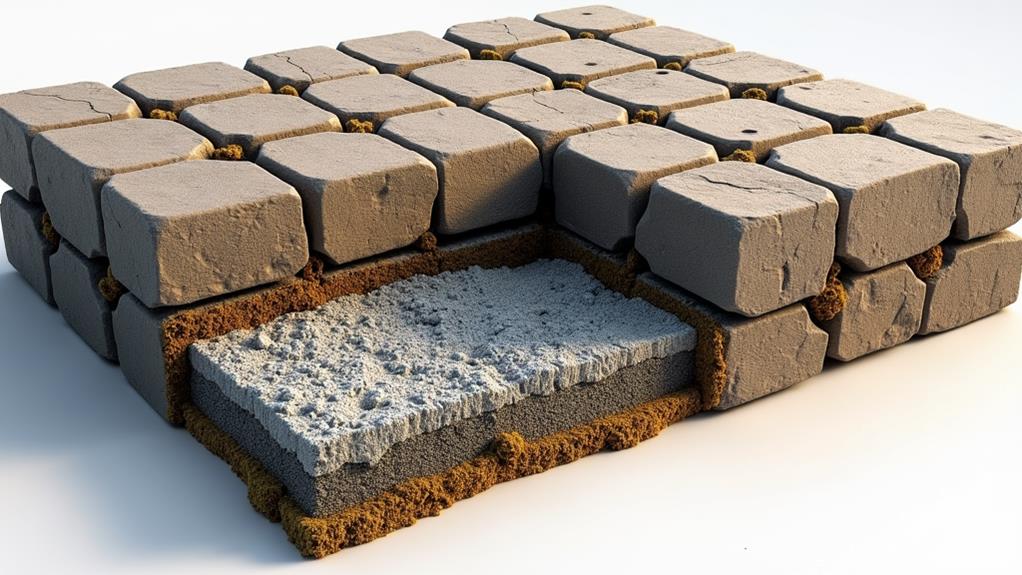
To effectively combat moss growth on your block paving, it’s crucial to enhance your drainage system. Poor drainage contributes to stagnant water, creating an ideal environment for moss to thrive. By implementing strategic drainage solutions, you can greatly reduce water retention on your paving surfaces.
Start by evaluating the current water flow patterns around your block paving. Observe how water accumulates during rainfall. This initial step will guide the adjustments needed to improve your drainage.
Here are key actions you can take to enhance drainage:
- Regrade the Surface: Verify the paving has a slight slope away from your home and other structures. This tilt helps direct water flow towards designated drainage areas, preventing pooling.
- Install Drains: If regrading isn’t sufficient, consider installing channel drains or French drains. These structures effectively capture and redirect water, reducing surface water.
- Choose Permeable Materials: When repairing or upgrading your paving, opt for permeable block paving. These allow water to seep through the surface and disperse into the ground, decreasing water accumulation. Permeable materials are particularly effective as they facilitate rapid drainage directly into the ground, further aiding in moisture management and moss prevention.
Implementing these drainage enhancements not only helps in moss prevention but also extends the longevity of your block paving. By directing water flow efficiently, you’ll maintain a drier and cleaner surface, deterring moss growth effectively.
Natural Moss Prevention Methods
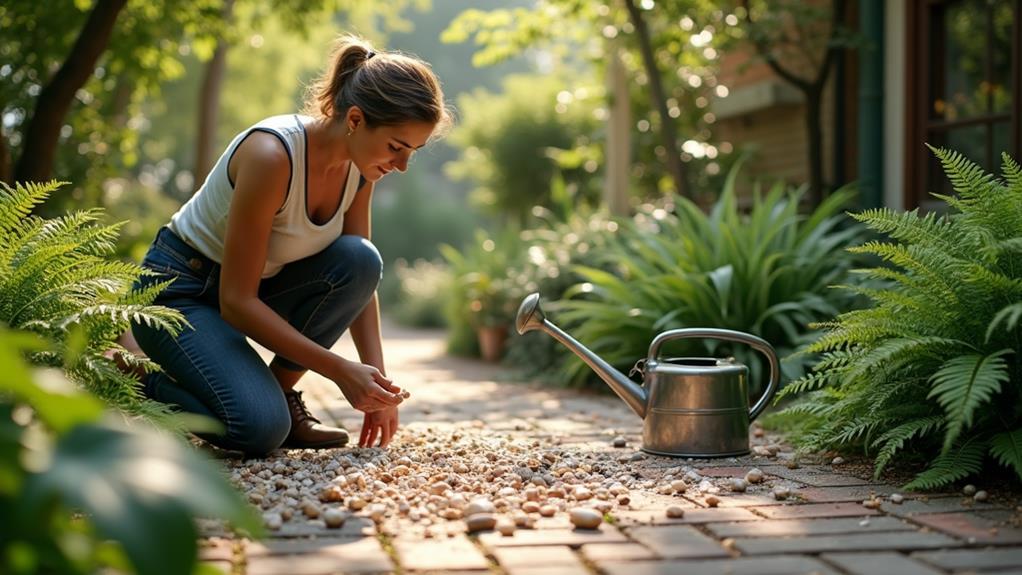
Several natural methods can effectively prevent moss from colonising your block paving. One of the most effective is incorporating moss-resistant plants around your paving areas.
Plants like creeping thyme or Irish moss (ironically) can create an environment less hospitable to actual moss growth due to their dense, mat-forming nature which competes for soil nutrients and light. For more detailed guidance, you can explore trusted local services that offer advice on enhancing your driveway’s resilience against moss.
Managing soil moisture is also essential. Since moss thrives in damp conditions, ensuring that your soil isn’t overly moist can deter moss formation.
Consider improving your soil’s drainage by adding organic material or sand to heavy soils. This adjustment helps reduce standing water, cutting down the moisture that moss needs to grow.
Additionally, you can use natural sunlight to your advantage. Moss dislikes bright conditions, so trimming overhanging branches to increase sunlight can naturally dry out potential mossy areas.
Regularly sweeping or raking leaves and debris off your block paving also reduces the shade and moisture moss requires.
Lastly, you can apply a thin layer of lime over the affected areas if your pH testing indicates high acidity. Lime increases soil pH, creating less favorable conditions for moss.
Professional Moss Removal Options

While you can employ several effective natural methods to prevent moss growth on your block paving, sometimes the infestation may become too severe for these measures alone.
In such cases, turning to professional moss removal services is your best bet. These experts use advanced techniques and specialised products to guarantee that the moss is eradicated thoroughly and your paving’s aesthetic and structural integrity are maintained.
Professional services offer:
- Tailored Solutions: Each infestation is unique, and professionals assess the extent and type of moss to tailor their approach accordingly.
- High-Efficiency Equipment: From high-pressure washers to industrial-grade moss killers, professionals are equipped with tools that far surpass typical household cleaning equipment.
- Preventative Treatments: Post-removal, professionals often apply treatments to inhibit future growth, guaranteeing long-lasting results.

Adding curb appeal to your home can be a daunting task, but it doesn't have to be. Designing and installing Read more

As homeowners, we are always looking for ways to improve and add value to our properties. One popular choice for Read more

Block paving, like a well-tended garden, is a testament to the care and attention given to one's property. Just as Read more