
When you're considering paving options for warm locations, you're looking for durability, heat resistance, and aesthetic appeal. The right materials can transform outdoor spaces while keeping them cooler underfoot. From natural stones like granite to innovative synthetic choices, each option has its unique benefits. But how do these materials perform under intense sunlight, and what impact do they have on energy efficiency? Exploring these questions can help you make a more informed decision for your projects.
Natural Stone Options
When choosing paving materials for warm locations, natural stone options stand out due to their inherent properties.
Granite pavers, for instance, boast low porosity, ensuring they resist water absorption, making them ideal for regions with heavy rainfall. Their heat resistance allows them to endure intense sunlight without cracking or fading. Additionally, granite's durability withstands heavy foot traffic and extreme weather, while its textured surface provides a non-slip feature, even when wet.
Travertine pavers also excel in heat resistance, maintaining a cooler surface underfoot. Their porous nature retains moisture, contributing to a comfortable outdoor experience. With excellent durability, travertine can handle significant foot traffic and adverse weather. The variety of designs and colors available allows customization to your style.
Sandstone pavers, with their low absorption rate, offer suitability for humid environments. Their slip-resistant surface enhances safety in wet conditions, and their weathering resistance makes them ideal for coastal climates.
Finally, limestone pavers provide durability and aesthetic appeal, complemented by a naturally slip-resistant surface. Regular cleaning and sealing can optimize their performance, ensuring they remain in top condition throughout the year. Moreover, selecting high-quality blocks ensures longevity and aesthetics, enhancing the overall value of your property.
Concrete Solutions
Natural stone options like granite and travertine provide excellent heat resistance, but concrete solutions also offer significant advantages for warm climates. High-density concrete pavers are particularly durable and resistant to erosion, making them ideal for areas with heavy foot or vehicular traffic.
To mitigate heat absorption, you can choose light-colored finishes or apply reflective sealants, keeping the surfaces cooler underfoot.
When installing concrete pavers, guarantee proper base construction with gravel and bedding sand to promote long-term stability. Pay attention to void spaces between pavers, as these can be filled with gravel or soil to enhance permeability.
Proper compaction of the soil subgrade is critical to maintain infiltration rates and may necessitate additional drainage solutions.
Maintenance is essential; sealing your pavers helps prevent discoloration and erosion, especially in humid environments. It is also important to ensure high-quality workmanship throughout the installation process to maximize the longevity of your concrete surfaces.
With a wide range of designs and colors available, you can achieve an aesthetic that suits your preferences while benefiting from the heat-resistant properties of concrete.
Synthetic and Hybrid Choices
Synthetic materials, crafted from high-density polyethylene and polypropylene, can endure temperatures up to 100°C. Their UV stabilizers prevent color degradation, while reflective surfaces and special coatings enhance heat resistance. These materials resist cracks and fading, making them ideal for high-traffic areas.
Maintenance is straightforward, requiring minimal effort to clean and periodic sealing for longevity.
Hybrid materials, combining concrete with polymers, offer even greater thermal resistance. Engineered to dissipate heat efficiently, they maintain integrity under fluctuating temperatures.
Their composite nature often results in superior durability, self-healing properties from minor damages, and stain-resistant coatings for easy upkeep.
Both synthetic and hybrid options provide versatile aesthetic choices, mimicking natural stone and allowing customization in colors and textures.
This flexibility enables you to integrate them with drainage systems or other materials for innovative designs. Additionally, these materials can be complemented by resin driveways to enhance both functionality and aesthetic appeal.
Ultimately, choosing synthetic or hybrid paving materials guarantees you meet the rigorous demands of heat resistance while enjoying long-lasting durability and aesthetic appeal.
Environmental Impact
Block paving materials offer considerable environmental advantages, making them a smart choice for sustainable construction. One of the key benefits is their ability to reduce surface runoff. By allowing water to seep through, block paving minimizes localized flooding and recharges groundwater supplies. This natural filtration process helps maintain aquifer health by filtering pollutants before they reach the water table.
Additionally, block paving mitigates the urban heat island effect. Light-colored blocks reflect sunlight, reducing surface temperatures. Their thermal mass absorbs and releases heat slowly, balancing temperature fluctuations and decreasing the demand for cooling, which in turn lowers energy consumption.
From a carbon footprint perspective, block paving is a sustainable option. It emits 75% less carbon dioxide compared to traditional concrete, thanks to its energy-efficient installation process and the incorporation of recycled materials. This considerably reduces the demand for raw materials while promoting a lower carbon footprint. Furthermore, the use of permeable options in block paving allows for natural water drainage, enhancing its environmental performance.
Lastly, the longevity of block paving translates to long-term environmental benefits. Its durability minimizes the need for frequent replacements or extensive repairs, and individual blocks can be easily replaced when needed. This extends the lifespan of paved areas, further reducing overall environmental impact.
Practical Applications and Care
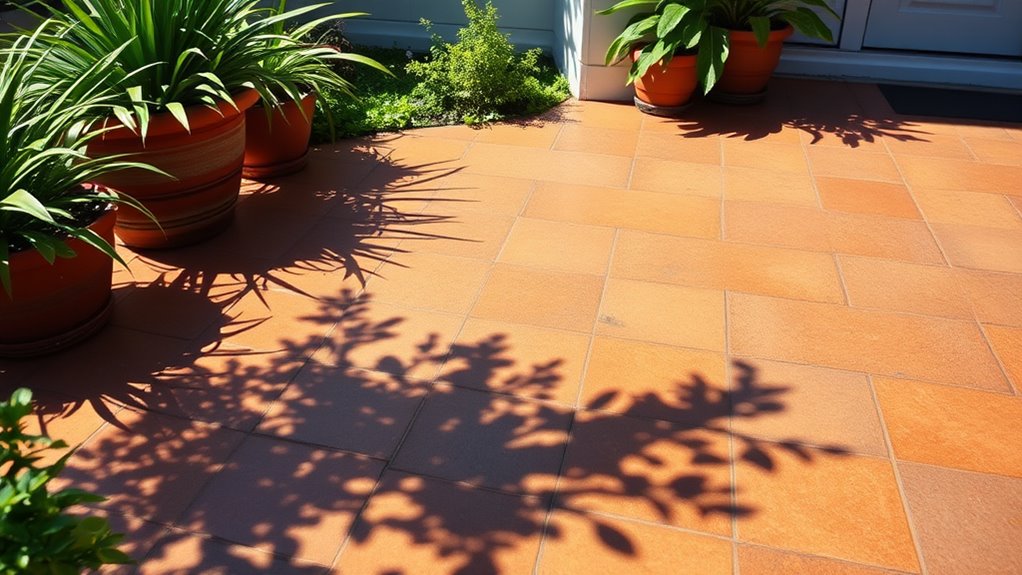
Choosing heat-resistant block paving materials not only enhances environmental sustainability but also offers practical applications for various settings. When selecting materials, consider options like porcelain pavers, which excel in heat and moisture resilience due to their low water absorption.
Light-colored concrete pavers effectively deflect sunlight, while travertine pavers provide natural heat resistance, ensuring cooler surfaces. Additionally, imprinted concrete is a great choice for its customizable designs, durability, and minimal maintenance needs.
For maintaining these materials, regular cleaning is essential. Use a brush, water, and soap to remove debris, and consider pressure washing at a 45-degree angle to minimize sand displacement.
For deeper cleaning, steam cleaning proves effective. Sealing your paving with a protective sealant prevents sand loss and inhibits weed growth, prolonging the lifespan of your installation.
Implement cool pavement technologies by incorporating reflective materials or coatings to enhance heat dissipation. High-density pavers with reflective sealants can further reduce heat absorption, while light colors facilitate efficient heat dissipation.
When dealing with snow and ice, use Teflon blades for snow removal to avoid scratching. Regular maintenance not only preserves aesthetics but also mitigates the need for costly repairs, ensuring your investment remains sound.
Conclusion
In choosing heat-resistant block paving materials, you're not just selecting a surface; you're investing in a sustainable solution for your outdoor spaces. The theory that aesthetics can coexist with functionality holds true, as options like granite and light-colored concrete not only reduce heat absorption but also enhance your landscape's visual appeal. By prioritizing these materials, you contribute to energy efficiency and resilience, proving that thoughtful choices can lead to both beauty and practicality in warm climates.

Adding curb appeal to your home can be a daunting task, but it doesn't have to be. Designing and installing Read more

As homeowners, we are always looking for ways to improve and add value to our properties. One popular choice for Read more

Block paving, like a well-tended garden, is a testament to the care and attention given to one's property. Just as Read more