
Yes, you can effectively clean your block paving with white vinegar. This readily available household product contains 5% acetic acid, ideal for tackling organic stains such as mildew and moss on your paving blocks. For best results, mix equal parts water and white vinegar in a garden sprayer, apply it generously over the blocks, and let it sit for about an hour. After the solution has done its work, scrub the area with a stiff brush to remove persistent stains and rinse thoroughly with water. Not only is vinegar a safe, non-toxic cleaner, but it’s also eco-friendly and economical. Exploring its frequent application and the right techniques can further boost the longevity and appearance of your paving.
Understanding Block Paving Materials
Block paving, a popular choice for driveways and patios, primarily consists of individual bricks or blocks crafted from concrete or clay. When you’re selecting block paving types, it’s crucial to understand the materials involved to guarantee you get the durability you need for your specific application.
Concrete blocks, often more cost-effective, come in a range of colors and finishes. They’re manufactured through a process of compressing concrete and a color pigment, making them versatile in design but slightly less durable than their clay counterparts.
Clay blocks, known for their natural color and long-lasting quality, are fired in a kiln to harden, which greatly enhances their durability and color retention. They’re less prone to fading and wear over time, making them ideal for high-traffic areas.
Choosing the right type of block paving depends on both your aesthetic preferences and functional needs. Consider factors like the load that the paving will bear, exposure to weather conditions, and your maintenance willingness.
Opting for a harder, more durable block can reduce long-term maintenance costs, despite the higher upfront expense. Always weigh the balance between initial costs and the longevity of your paving solution to make the most informed decision.
The Science Behind White Vinegar
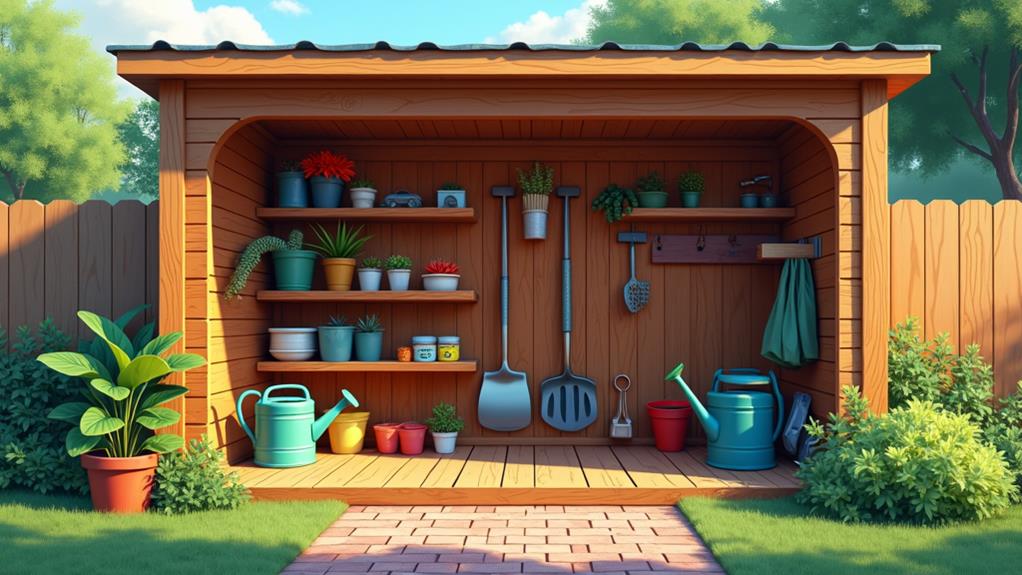
White vinegar, often hailed as a household miracle cleaner, owes its effectiveness to acetic acid, a key component that makes up about 5% of its solution. This organic compound not only cleans but also disinfects, making it a powerful tool in your cleaning arsenal, especially when dealing with outdoor surfaces like block paving.
Acetic acid works by breaking down the molecular structures of dirt, grime, and microbial life. As a natural disinfectant, it tackles a variety of pathogens, ensuring that the surfaces you clean aren’t just visually spotless but hygienically safe. For best results, it’s recommended to rinse thoroughly after application to prevent any acidic residue that might affect the sand between the paving stones.
Here’s how it emotionally connects with your needs and aspirations for a clean and safe home environment:
- Peace of Mind: Knowing that your family is playing on paving cleaned with a non-toxic, natural product.
- Satisfaction: Seeing the immediate results as dirt lifts away with minimal effort.
- Relief: Feeling assured that the natural acid is gentle on your paving while tough on stains.
- Empowerment: Harnessing the power of a simple kitchen staple to maintain your property’s appeal.
- Joy: Experiencing the fresh, clean aesthetic of your outdoor spaces after a thorough vinegar treatment.
Harness the simplicity and effectiveness of white vinegar to transform your block paving from dingy to dazzling.
Preparing to Clean With Vinegar
Having explored the powerful properties of white vinegar, let’s now focus on how you can effectively prepare to clean your block paving with this natural cleaner.
Before you begin, it’s essential to gather the right cleaning tools and follow necessary safety precautions to guarantee a smooth and safe cleaning process.
Firstly, you’ll need a large bucket or a garden sprayer to apply the vinegar solution evenly across your paving.
Opt for a stiff-bristled broom or a scrub brush, which will help you tackle stubborn stains and grime effectively.
Don’t forget to wear rubber gloves to protect your hands from the acidity of the vinegar, and consider safety goggles if you’re sensitive to splashes.
Make sure the area you’re cleaning is clear of any furniture, vehicles, and debris.
Sweep the surface thoroughly to remove loose dirt, leaves, and other detritus. This initial cleanup helps the vinegar solution work directly on the stains rather than the layer of dust.
Lastly, check the weather forecast. A dry, sunny day is ideal as it aids in the drying process and prevents the diluted vinegar from washing away before it has done its job.
Now, with your tools ready and precautions in place, you’re set to begin the cleaning process.
Step-by-Step Vinegar Cleaning Process
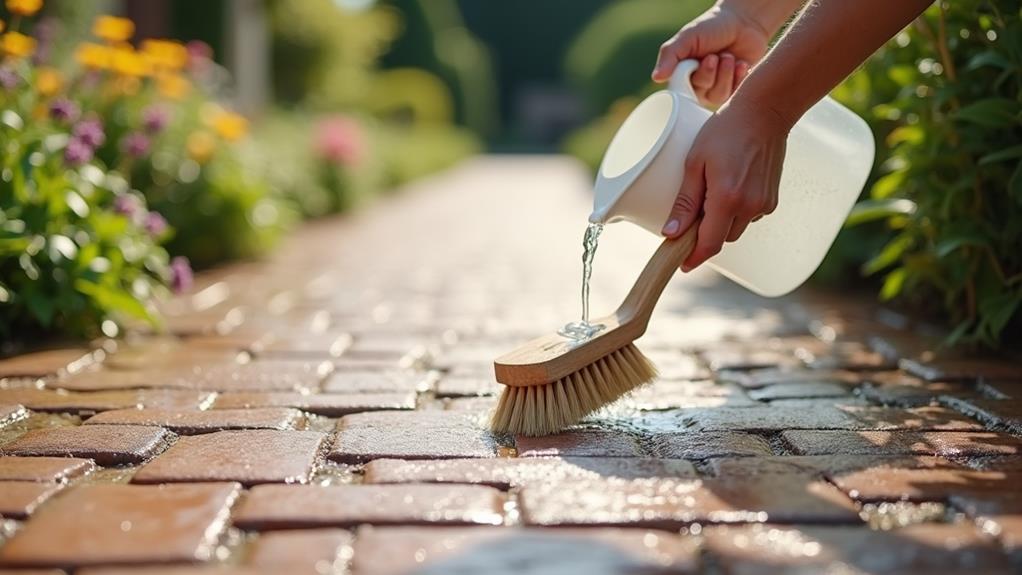
Begin by mixing a solution of equal parts white vinegar and water in a large bucket or garden sprayer. This simple mixture leverages the vinegar’s effectiveness in tackling the grime and moss that often plague block paving.
Make certain you’re dressed in suitable clothing and gloves, as vinegar can irritate your skin.
Next, apply the vinegar solution liberally over your block paving. Don’t be shy; guarantee every nook and cranny is covered. The acidity of the vinegar works wonders in breaking down the dirt without harming the paving stones.
For enhancing the longevity and appearance of your paving, it’s vital to take into account regular maintenance and appropriate drainage systems that effectively manage water flow and prevent damage.
Let the solution sit for at least 60 minutes. This waiting period is essential as it allows the vinegar to penetrate and lift the dirt, making your subsequent cleaning efforts much more effective.
After the hour has elapsed, scrub the paving with a stiff brush. Focus on areas with stubborn stains or moss. The physical action of scrubbing combined with the vinegar solution will clear away most of the unsightly marks.
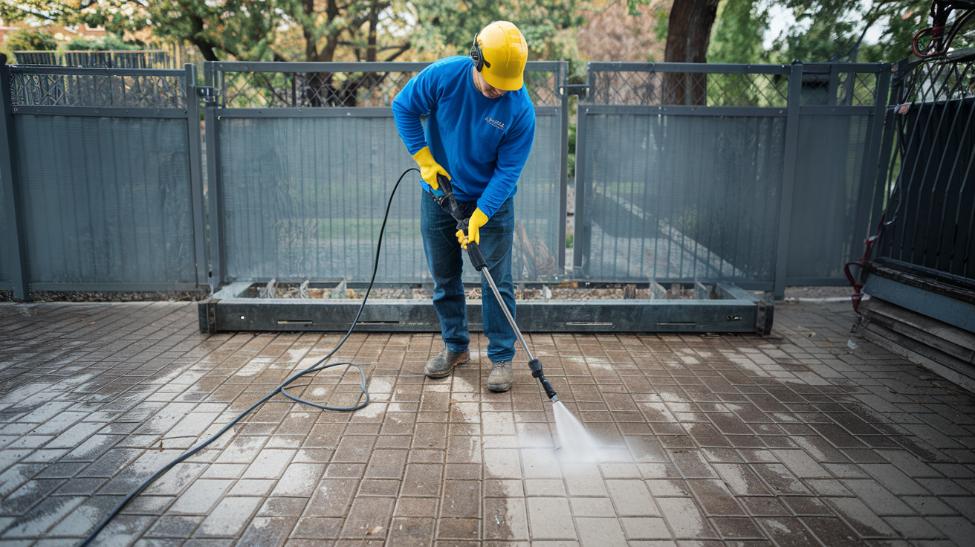
Finally, rinse the area thoroughly with clean water from a hose or pressure washer. This step not only washes away the loosened dirt but also any remaining vinegar, leaving your block paving looking refreshed and revitalised.
*Feel the satisfaction as you see the dirt wash away.*
*Watch your once dull paving regain its vibrant color.*
*Smell the clean, sharp scent of vinegar as it works its magic.*
*Hear the satisfying sound of your brush scrapping away the last bits of moss.*
*Touch your paving and feel the smooth, clean surface beneath your fingers.*
Comparing Vinegar With Commercial Cleaners
In comparing the effectiveness of vinegar to commercial cleaners, it’s essential to weigh both their environmental impact and cleaning power. You’ll find that vinegar, a natural product, stands out for its eco-friendliness compared to many chemical-based commercial options.
While vinegar offers a safer alternative, you must also consider its cleaning efficacy.
Vinegar’s effectiveness on block paving primarily depends on the type of dirt or stain you’re tackling. It performs exceptionally well on organic stains, such as mildew and moss, breaking them down with its acetic acid content.
However, for oil or grease stains, commercial cleaners might offer a more potent solution due to their stronger chemical formulations.
When it comes to cleaner comparison, remember that vinegar is non-toxic and doesn’t release harmful fumes or chemicals into the environment. This makes it an ideal choice if you’re aiming for a green cleaning approach.
Additionally, like the minimal maintenance requirements of tarmac driveways, vinegar offers a cost-effective and low-maintenance solution for regular cleaning, making it suitable for both eco-conscious and budget-aware users.
On the other hand, many commercial cleaners contain phosphates, solvents, and other harsh chemicals that can be detrimental to both the environment and your health.
Ultimately, your choice depends on the specific cleaning needs and your environmental priorities. Vinegar, while gentler, can be remarkably effective for regular maintenance and certain types of stains.
Maintenance Tips After Vinegar Cleaning

After you’ve cleaned your block paving with white vinegar, maintaining its pristine condition requires a few straightforward steps. Post-cleaning care is essential to extend the life and beauty of your paving. Here are some practical tips to keep in mind:
- Rinse Thoroughly: Immediately after the vinegar treatment, rinse the area with plenty of water. This prevents the acid in the vinegar from continuing to interact with the materials.
- Regular Sweeping: Keep the surface free from debris and dirt. Regular sweeping prevents the buildup of materials that can lead to stains and growths.
- Prompt Stain Removal: Address spills and stains quickly. The longer a substance sits, the harder it will be to remove.
- Sealing Options: Consider applying a sealant. Sealing your block paving can protect it from stains, weather conditions, and fading. Choose a sealant that’s appropriate for the type of blocks you have.
- Periodic Deep Clean: Plan for a deep clean at least once a year. This maintains the appearance and prevents the accumulation of grime and moss.
In addition to these steps, incorporating weed management techniques can also be beneficial.
Regular maintenance not only enhances the appearance but also prolongs the lifespan of the paving.

Adding curb appeal to your home can be a daunting task, but it doesn't have to be. Designing and installing Read more

As homeowners, we are always looking for ways to improve and add value to our properties. One popular choice for Read more

Block paving, like a well-tended garden, is a testament to the care and attention given to one's property. Just as Read more