
Block paving is a popular choice for driveways and patios due to its durability and versatile design options. Before starting the installation process, it is important to properly prepare the area and lay a solid foundation.
This includes designing the layout, gathering the necessary tools and materials, and calculating the number of block pavers needed. Kiln-dried sand is the recommended sand for block paving joints, as it is fine and dry.
Additionally, understanding the planning permission requirements is important before starting the project. Laying block paving involves excavation, laying edge restraints, creating a sub-base layer, and properly laying and screeding the sand.
It is essential to follow these steps to ensure a long-lasting and well-constructed block paving installation.
If you’re looking for professional block paving services in Nottingham, Block Paving Nottingham is the go-to option.
With years of experience and a team of skilled professionals, they specialise in creating stunning block paving designs and patterns for driveways and patios. Visit their website blockpaving-nottingham.co.uk to explore their services and get a free quote today!
Tips for Preparing the Paving Foundation
When it comes to block paving, the foundation is a crucial element that should not be overlooked. A well-prepared foundation will ensure the longevity and stability of your block paving installation. Here are some essential tips for preparing the paving foundation:
- Thoroughly measure and mark out the area: Before starting any groundwork, take accurate measurements and mark out the area where you intend to lay the block paving. This will help you plan the layout and ensure that the paved area fits perfectly into your outdoor space.
- Remove vegetation and topsoil: Clear the area of any weeds, grass, or other vegetation that may hinder the foundation’s stability. Additionally, remove the top layer of soil to create a solid base for your block paving.
- Level the ground: Use a garden rake to level the ground, ensuring that it is smooth and even. This will provide a solid foundation for the block pavers and prevent any unevenness or sinking in the future.
- Build a block paving border: To define the paved area and prevent the blocks from shifting, construct a block paving border using edge restraints or kerbs. This border will serve as a guide and ensure that the block paving remains intact and in place.
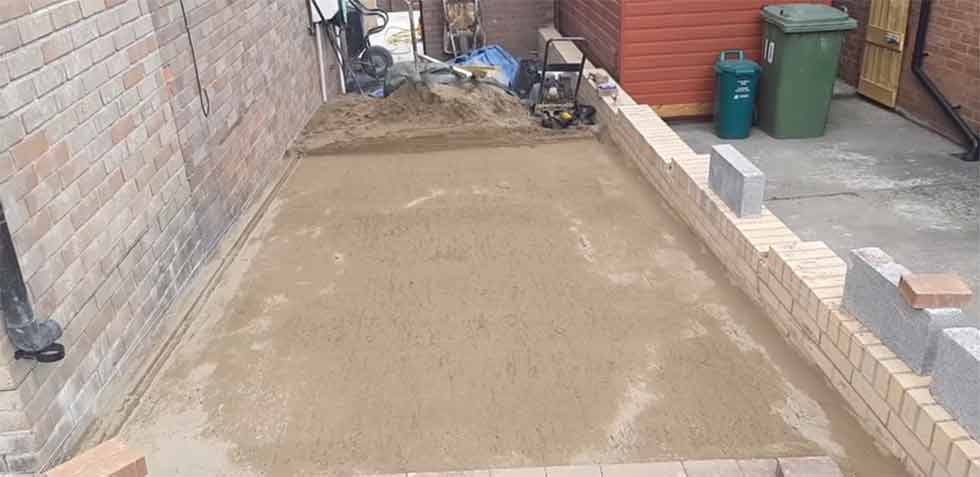
- Backfill with MoT/crusher run: Fill the central area of the paving with a layer of MoT/crusher run. This compacted aggregate material will create a stable base for the block pavers, providing additional support and preventing any movement or sinking.
- Apply a layer of sharp sand: Once the central area is backfilled, apply a layer of sharp sand on top. This will further level the surface and create a smooth base for laying the block paving. Make sure to screed the sand to achieve an even thickness.
Following these tips for preparing the paving foundation will ensure that your block paving installation stands the test of time. A solid and level foundation is the key to achieving a professional and visually appealing result.
Recommended Materials for Paving Foundation
| Material | Advantages |
|---|---|
| MoT/crusher run | – Provides a stable base – Prevents movement – Adequate drainage |
| Sharp sand | – Ensures an even surface – Supports block stability – Allows for proper compaction |
| Edge restraints or kerbs | – Defines the paved area – Prevents block shifting – Adds visual appeal |
Step-by-Step Guide to Laying Block Paving
When it comes to transforming your outdoor space, block paving is a fantastic choice.
Not only does it offer durability, but it also provides a wide range of design options to suit your style.
If you’re considering laying block paving yourself, follow this step-by-step guide to ensure a successful installation.
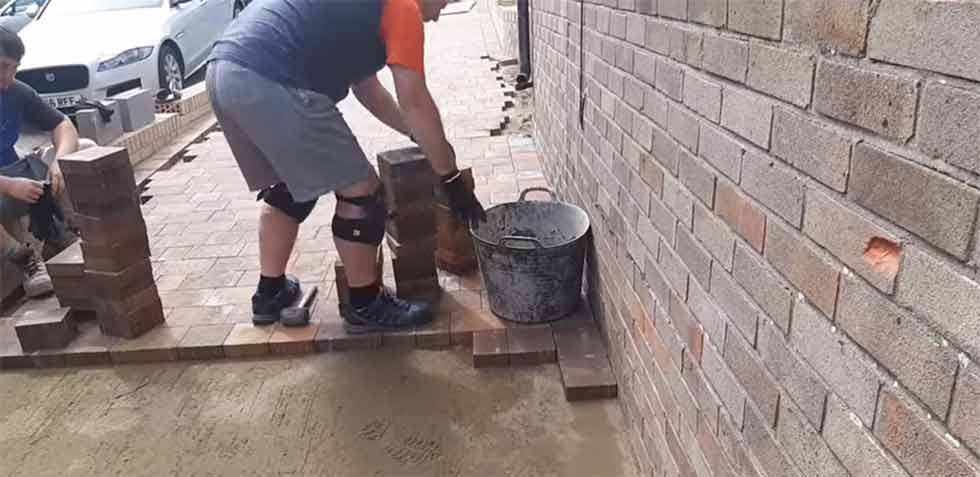
The first step is to start from the lowest point of the paved area and place the block pavers on top of the laying course.
It’s important to maintain a slight elevation above the desired finish level, as the blocks will be compacted down later. If necessary, cut additional blocks to fit the edges or fill in gaps for a seamless look.
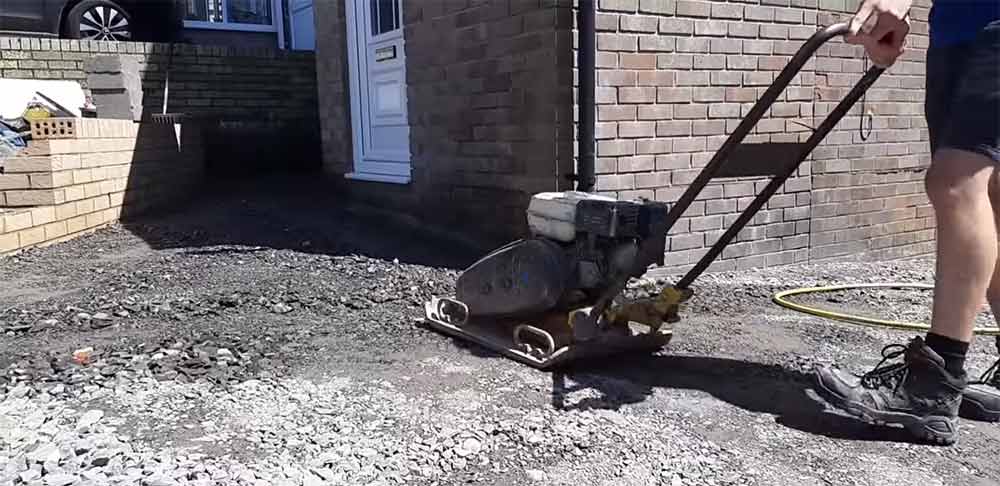
Once the block pavers are laid, it’s time to sweep the area and compact it using a plate compactor. This ensures that the blocks are firmly in place and creates a stable surface to walk or drive on. After compacting, it’s important to joint the block paving. This involves brushing kiln-dried sand into the joints and compacting it further. Any gaps in the jointing should be filled and compacted again for a smooth and even finish.
By following these steps, you can achieve a well-laid and finished block paving installation that will enhance the beauty and functionality of your outdoor space. If you’re looking for professional block paving services in Nottingham, Block Paving Nottingham (https://blockpaving-nottingham.co.uk/) is your go-to company. They have the expertise and experience to create stunning block paving designs that will stand the test of time.
Call us to get a price quote on a block paving. Contact us today on 07595 510190 to receive a free quote or visit our website.
Source Links
- https://www.simplypaving.com/
advice-centre/how-to/laying-block
-paving-for-your-garden-or-driveway/ - https://www.marshalls.co.uk/
gardens-and-driveways/
blog/how-to-lay-block-paving - https://www.pavingexpert.com/blocks2

Adding curb appeal to your home can be a daunting task, but it doesn't have to be. Designing and installing Read more

As homeowners, we are always looking for ways to improve and add value to our properties. One popular choice for Read more

Block paving, like a well-tended garden, is a testament to the care and attention given to one's property. Just as Read more