
Yes, you can extend your block paved driveway, but first, you’ll need to navigate through local zoning laws and secure the required planning permissions. Make sure the extension doesn’t exceed limits on non-permeable surface area in your front yard and check with your local planning department for specific constraints that may apply to your property. Choosing the right materials, such as permeable pavers, will also be vital to managing drainage effectively and adhering to environmental regulations. Hiring a qualified contractor who understands local guidelines and has experience with similar projects is essential. With careful planning and expert advice, you’ll find that the possibilities to enhance your space are numerous.
Assessing Local Zoning Laws
Before you begin extending your block paved driveway, it’s vital to check local zoning laws. Local regulations can greatly influence how and where you can build. You’ll need to understand the specific rules that apply to your property, which are designed to guarantee safety, compliance, and harmony within your community.
Firstly, determine if there are any restrictions on the length or width of driveways in your area. Some local ordinances limit the percentage of a front yard that can be covered by non-permeable surfaces to control runoff and maintain green space. You’ll find this information at your local planning department or their website.
Additionally, when planning your driveway extension, consider the implications of dropped kerbs, especially if the extension might require a new or altered access point to your property.
Next, consider property boundaries. It’s vital that your driveway extension doesn’t encroach on adjacent properties or public land.
Accurate measurements and sometimes a professional survey are necessary to confirm boundary lines. Overstepping these boundaries can lead to legal disputes and potential fines.
Understanding Planning Permissions
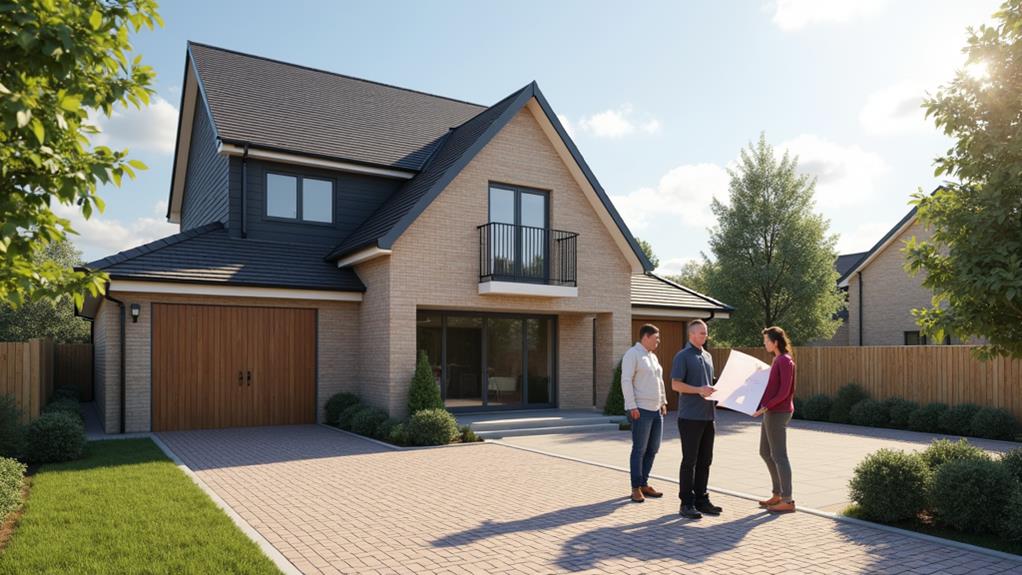
After evaluating local zoning laws, you’ll need to understand whether your block paved driveway extension requires planning permission. This step is vital as you navigate through the legal requirements that govern property modifications.
First, check with your local planning authority to determine specific driveway size regulations and other relevant requirements. It’s important to know the thresholds that might necessitate a formal application for permission.
Typically, planning authority requirements will vary based on the location and size of your property. For instance, if your extension surpasses certain square footage, you might need to apply for permission. Additionally, if your property is located in a designated area, such as a conservation area or a listed building vicinity, stricter rules could apply.
You should also consider the impact of your driveway extension on local drainage systems. In some regions, regulations require that new driveways incorporate sustainable drainage systems (SuDS) to manage runoff effectively.
These systems are significant not only for legal compliance but also for preventing potential waterlogging and guaranteeing the longevity of your driveway. Proper drainage solutions like these are important for maintaining the structural integrity and appearance of block paving.
Failure to comply with these standards can result in non-approval of your planning application. Make sure you gather all the necessary documentation and detailed plans of the proposed extension.
These should accurately represent the dimensions and the boundary treatments, as they’re critical in securing approval from your planning authority.
Choosing the Right Materials
Selecting the appropriate materials for your block paved driveway is vital to guarantee its durability and aesthetic appeal. You’ll want to take into account not only the type of blocks but also the color selection and paving patterns that best fit your home’s style and your personal preferences.
When choosing materials, first think about the type of stone. Concrete blocks are popular due to their versatility and strength, while clay bricks offer a classic look with longer-lasting color and a slightly higher price tag. Natural stone is another option, providing unique textures and colors but at a higher cost and with additional maintenance requirements.
It’s important to remember that both moulded concrete blocks and kiln-fired clay blocks have unique advantages in different settings, as concrete offers robust durability while clay can be better for water permeability.
The colour selection greatly influences the overall look of your driveway. Lighter colors can make a small area appear larger, while darker tones tend to hide stains better but can absorb more heat. It’s essential to choose a colour that complements your home’s exterior.
Paving patterns also play a key role in the driveway’s functionality and appeal. Herringbone patterns are highly durable due to their interlocking design, making them ideal for driveways. Meanwhile, stretcher bond and basketweave patterns offer easier installation and can suit areas with less traffic.
Carefully weigh these factors to make sure you choose materials that meet both your aesthetic desires and practical needs.
Ensuring Adequate Drainage
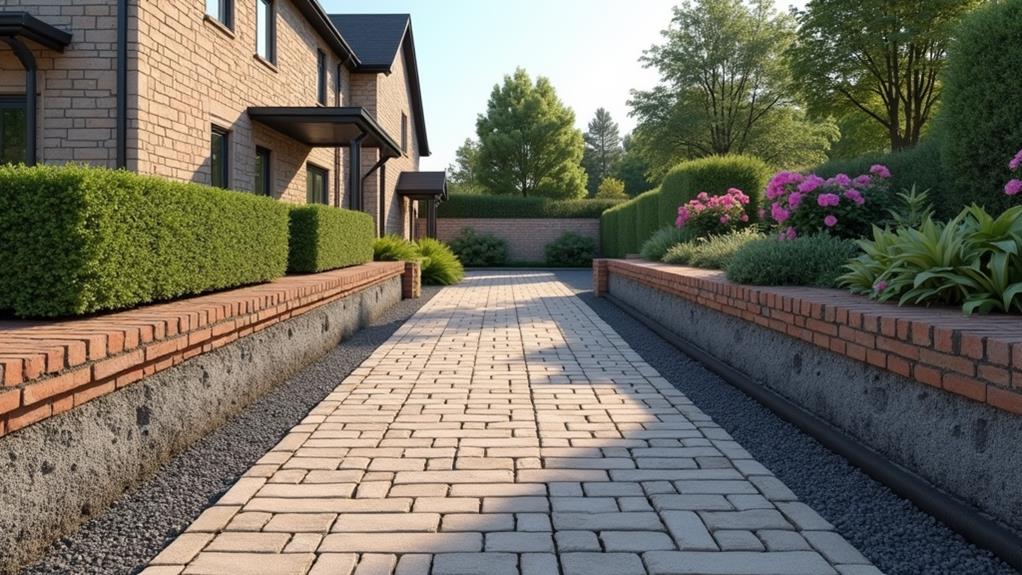
When extending your block paved driveway, guaranteeing adequate drainage is essential to prevent water accumulation that can lead to structural damage.
It’s imperative to integrate effective drainage solutions to manage water flow and protect the integrity of your driveway.
Firstly, consider the slope of your driveway. It should be graded away from your home to facilitate runoff. A minimum slope of 1% is generally recommended.
Without proper grading, you could face pooling water which not only damages the blocks but also affects the sub-base.
Next, incorporate a drainage system such as channel drains, which collect water along the edges of the driveway and direct it away from the structure.
These are particularly effective in areas prone to heavy rainfall. Make sure these are installed at key points where water tends to collect.
Additionally, the use of versatile products like permeable pavers from Marshalls can enhance the drainage capacity, helping to manage water flow efficiently.
Additionally, permeable paving can be a viable option. This allows water to percolate through the surface and into the ground beneath, reducing runoff and enhancing groundwater recharge.
However, it’s essential to use the right materials and installation techniques to maintain the driveway’s durability.
Lastly, regular maintenance of your drainage systems is important. Keep them clear of debris to guarantee they function effectively and extend the lifespan of your driveway.
Hiring Qualified Contractors
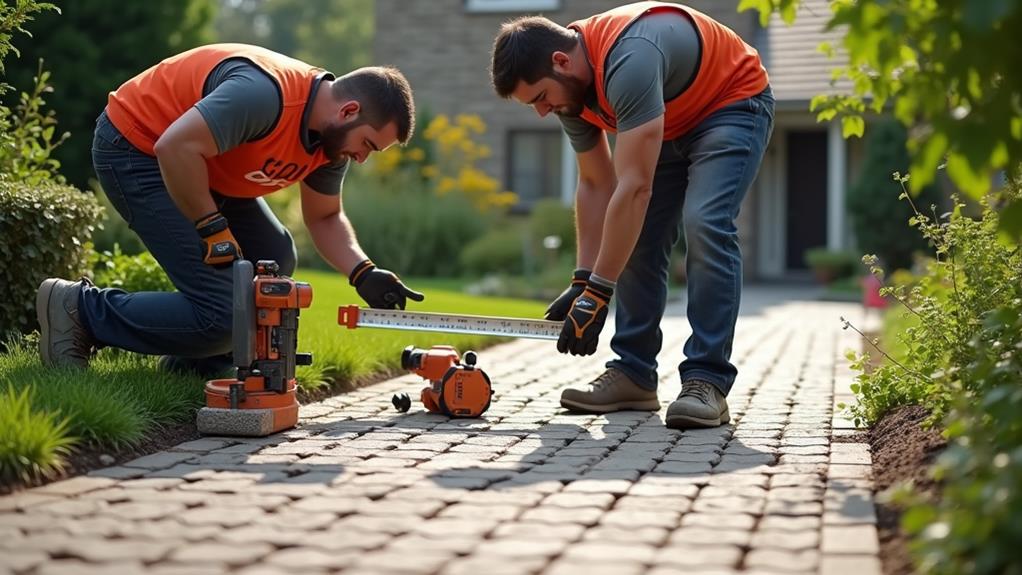
Having covered the importance of proper drainage for your extended block paved driveway, the next step involves engaging skilled professionals to guarantee the task is completed to high standards.
Hiring a contractor with the right qualifications assures that your project adheres to the latest industry standards and local building codes. Start by verifying their certifications and experience in driveway paving projects specifically. You’ll want someone who not only has the technical skills but also a solid track record.
When discussing your project, it’s essential to establish clear project timelines. A competent contractor should provide you with a detailed schedule that includes the start and completion dates, along with milestones for critical phases like excavation and paving. This timeline not only helps in tracking progress but also in managing your expectations and planning around the construction activity.
Ask potential contractors for references and examples of previous work. Don’t hesitate to visit past project sites if possible. This first hand look can give you a better understanding of how well the contractor’s work stands up over time.
Additionally, confirm they’re licensed and insured to protect yourself against any liability. By taking these steps, you’ll be set to choose a contractor who meets your needs and delivers quality workmanship.
It’s also beneficial to check if they’re familiar with industry-leading installation techniques which are vital for guaranteeing the longevity and compliance of your driveway with local planning regulations.
Maintenance Tips Post-Extension
After extending your block paved driveway, it’s important to implement a regular maintenance routine to preserve its appearance and functionality. Regular cleaning and surface sealing are significant components of this routine, making sure your driveway remains in top condition.
Start by scheduling regular cleaning sessions. Depending on your local environment and traffic, you might need to clean the driveway bi-weekly or monthly. Use a high-pressure washer to remove dirt, grime, and any weeds that may have sprouted between the blocks.
It’s necessary to avoid harsh chemicals that can damage the paving material. Instead, opt for mild detergents specially formulated for block paving.
Surface sealing is another key step, ideally performed every two to three years. Sealing the surface helps in preventing stain absorption and reduces the growth of weeds and moss.
Choose a sealant that’s compatible with your paving material. Application should be done on a dry day when temperatures are moderate. Confirm that the surface is clean and dry before applying the sealant using a roller or sprayer.
This not only enhances the appearance of your driveway but also protects it from weathering and fading.
Adhering to these maintenance tips will extend the life and beauty of your block paved driveway.

Adding curb appeal to your home can be a daunting task, but it doesn't have to be. Designing and installing Read more

As homeowners, we are always looking for ways to improve and add value to our properties. One popular choice for Read more

Block paving, like a well-tended garden, is a testament to the care and attention given to one's property. Just as Read more